What is computer vision? How it’s transforming workplace safety and hazard detection
Introduction: The Rise of Computer Vision Technology
Computer vision is transforming how industries approach workplace safety. By combining AI algorithms with CCTV cameras, it enables systems to interpret and analyze images and video in real time. With computer vision workplace safety solutions, organizations move from a reactive approach to a proactive one addressing risks before they escalate into accidents. The technology not only enhances compliance but also supports continuous safety monitoring, ensuring every corner of a facility is under intelligent surveillance.
Growth of AI in industrial and workplace settings
AI-powered safety solutions are transforming industries with real-time risk detection. Cameras spot hazards like missing PPE, spills, or restricted access and alert supervisors instantly. As industries adopt smarter safety systems, computer vision is becoming a cornerstone for building safer, more compliant, and more efficient workplaces.
Importance of visual data in automation and safety
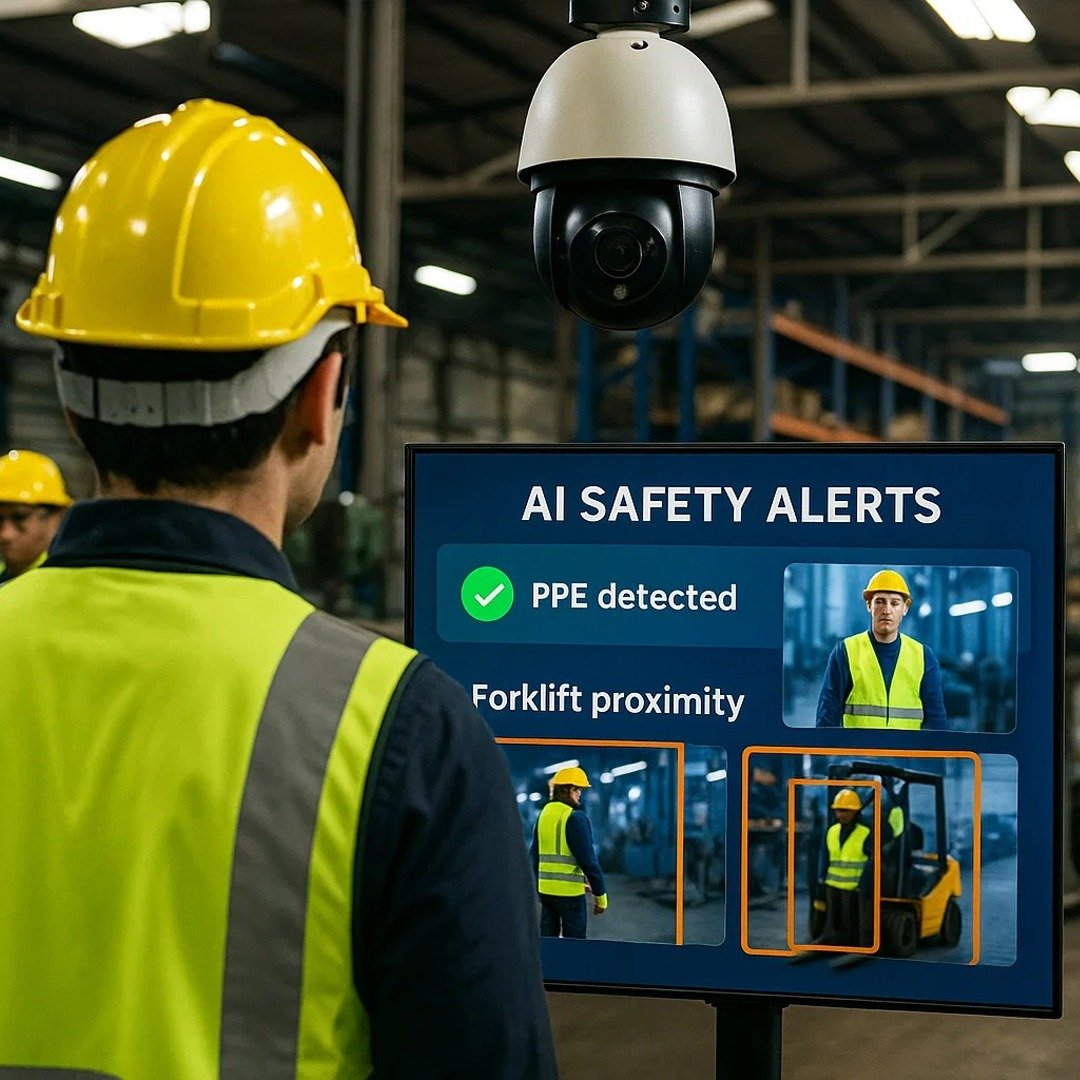
Visual data is the backbone of automation, enabling AI systems to identify and respond to hazards instantly. With computer vision for safety, AI-powered cameras provide continuous monitoring, detecting risks like missing PPE, unsafe forklift proximity, or unauthorized zone entry in real time. This ensures no critical detail is overlooked while delivering comprehensive reports that strengthen compliance and support predictive safety. By recognizing patterns before incidents occur, visual data transforms workplace safety from reactive to truly proactive.
What Is Computer Vision, and How Does It Work?
Computer vision is the technology that processes and analyzes visual data in real time, allowing automated detection, recognition, and decision-making to improve workplace safety.
How does computer vision mimic human sight?
Unlike human sight, computer vision safety detection uses cameras and AI algorithms to identify objects (like helmets, gloves, or vests), detect movements (walking, falling), and monitor unsafe situations (such as a worker entering a restricted zone). This creates real-time awareness of the work environment, helping prevent incidents before they occur.
Key technologies: image recognition, object detection, and tracking
- Image recognition: Understands what the camera sees, such as checking if PPE is being worn correctly.
- Object detection: Locates and identifies people and hazards instantly to improve operational safety.
- Object tracking: Follows the movement of workers and machines; for example, tracking a forklift’s path and alerting if it comes too close to a person
Applications of Computer Vision in Workplace Safety
Computer vision safety detection enables real-time hazard monitoring, compliance tracking, and automated safety alerts that prevent accidents before they happen.
Real-time hazard detection in industrial environments
Real-time hazard detection means spotting safety risks the moment they happen before they turn into accidents. In fast-moving industrial spaces hazards can appear suddenly, like chemical spills, workers entering restricted zones, or forklifts blocking pathways.
To detect these incidents instantly, companies use AI-powered CCTV cameras. When a risk is detected, alerts are sent right away to supervisors. This quick response helps prevent accidents, especially in busy environments. Real-time AI monitoring adds an extra layer of protection, making workplaces safer, faster, and more compliant.
Monitoring compliance with safety protocols (helmets, vests, gloves)
In high-risk industries, PPE like helmets, vests, and gloves is a must, but keeping track of everyone isn’t easy. That’s where computer vision AI helps. These smart systems use AI-powered cameras to automatically check if workers are wearing the right PPE:
- Helmet detection: Spots workers without helmets.
- Vest detection: Looks for reflective vests and alerts if missing.
- Glove detection: Checks for gloves in required areas.
This real-time monitoring helps prevent injuries and keep the environment safe.
Preventing accidents using automated alerts
One of computer vision’s major benefits is its ability to prevent accidents by sending instant alerts. In fast-paced industrial settings, even a short delay in spotting a hazard can lead to injury.
Cameras monitor work areas continuously and analyse the live video. It is trained to spot risks like missing helmets, wet floors, or workers entering restricted zones. As soon as a hazard is detected, the system reacts by immediately sending alerts to supervisors via dashboard notifications. This fast response helps teams act instantly and prevent accidents before they happen.
How Computer Vision Improves Workplace Safety Compliance
Computer vision helps companies enforce safety rules more effectively by automatically detecting non-compliance and sending instant alerts to prevent accidents
Case examples from construction, warehousing, and manufacturing
- Construction Sites: AI cameras monitor PPE like helmets and vests, detecting workers in danger zones and alerting supervisors to prevent injuries.
- Warehousing: AI powered CCTV monitors forklift–person proximity in real time, detecting pedestrians in forklift danger zones. When a proximity threshold is breached, the system issues instant alerts, improving forklift safety.
- Manufacturing Plants: AI detects hazards like spills, unsafe machine proximity, and missing PPE. AI spotted workers near high-speed machines, prompting instant alerts that prevented potential injuries.
Benefits over manual safety checks
Manual safety checks are often limited by human error and delays, especially in fast-paced industries. AI-powered CCTV cameras offer real-time monitoring, instantly detecting safety violations like missing PPE or zone intrusions. AI systems work continuously and automate reporting, enabling faster responses, improved compliance, and a safer working environment.
Computer Vision for Safety Detection: Key Features
Modern computer vision systems offer powerful safety features like PPE detection, equipment monitoring, and fall or proximity alerts that helps in creating workplaces that are safer and more compliant
PPE detection (helmets, masks, gloves)
PPE (Personal Protective Equipment) that workers wear to protect themselves from injuries or health risks in the workplace. Common examples are helmets, safety vests, gloves, safety boots, goggles, and face shields.
AI-powered PPE monitoring systems play a critical role in workplace safety by automatically checking if workers are properly equipped with essential PPE. If any item is missing, the system instantly detects and alerts supervisors in real time.
Forklift and machinery safety monitoring
Computer vision enhances workplace safety by continuously tracking the movements of both forklifts and workers. If a worker steps into a forklift zone or when two forklifts come near, the system instantly sends a real-time alert to prevent collisions. Similarly, the AI monitors heavy machinery areas to ensure machine guards are in place and being used correctly, detecting instances where guards are removed during operation or improperly positioned. This helps in reducing the risk of severe injuries.
Fall detection and proximity alerts
Using AI-powered cameras, the system can instantly recognize when a worker slips, trips, or falls and trigger an immediate alert for rapid assistance. It also monitors worker proximity to hazardous areas or machinery, ensuring they don’t cross into restricted zones. These alerts help prevent accidents before they escalate and ensure faster response in case of emergencies, promoting a safer workspace.
The Disrupt Labs Computer Vision AI for Safer Workplaces
At The Disrupt Labs, our computer vision AI safety solutions enhance workplace safety by continuously monitoring environments through smart AI cameras. These systems ensure PPE compliance, detect risks like spills, blocked exits, or restricted zone entry, and send real-time alerts for immediate action. By reducing human error and automating safety checks, The Disrupt Labs helps organizations maintain EHS compliance while creating safer, smarter, and more efficient workplaces.
The Future of Computer Vision in Occupational Safety
The future of workplace safety lies in computer vision AI, shifting safety from a reactive approach to proactive prevention. With continuous monitoring, computer vision for safety will instantly detect hazards, ensure compliance, and take immediate action to prevent incidents before they escalate. As these AI solutions evolve, industrial environments will become safer, smarter, and more efficient operating with greater speed, accuracy, and minimal human error.
Contact The Disrupt Labs today to see how computer vision AI can redefine your occupational safety strategy.
Frequently Asked Questions
Computer vision in workplace safety refers to AI-powered systems that use cameras to analyze visual data in real time, detecting hazards, PPE violations, and unsafe activities to prevent accidents.
The main benefits include real-time hazard detection, improved compliance with EHS regulations, reduced accidents, and proactive prevention of workplace incidents.
Yes. Computer vision can monitor forklift movement, detect unsafe proximity to pedestrians, and send immediate alerts to prevent collisions in high-traffic warehouse areas.
Yes. Unlike manual inspections, computer vision provides 24/7 monitoring, never misses details, and reacts instantly to hazards making it more reliable and efficient for workplace safety.

Wafa Zehra
She brings together her expertise in business development and content strategy to showcase the growing role of computer vision AI in enhancing workplace safety and HSE/EHS compliance. At The Disrupt Labs, she focuses on writing insightful content that explores AI-driven innovations and their impact on industrial safety.
View all posts