How AI-Powered CCTV Enable Smart Industrial Safety and Monitoring
In the high-stakes environment of modern manufacturing and logistics, the cost of oversight failure is substantial. Here is where the importance of industrial safety solutions becomes paramount. According to the National Safety Council (NSC), the total cost of work-related injuries reached $167 billion in 2023, encompassing wage losses, medical expenses, and administrative overhead. To mitigate these risks, enterprises are transitioning from manual surveillance toward an automated ai camera network. These systems provide the continuous oversight necessary to identify hazards before they escalate into recordable incidents; this is the first step in ensuring that protection is proactive rather than reactive.
What is an AI Camera?
In the industrial sector, an ai camera is defined as an intelligent vision system integrated with deep-learning algorithms designed for real-time scene analysis. Unlike traditional CCTV that merely records video, an ai enabled camera acts as an autonomous safety auditor. It processes visual data to detect PPE violations, monitor housekeeping standards, and ensure floor-level compliance. This technology bridges the safety gap in facility management by interpreting pixels as actionable data. To sum it up, defining an ai based camera as a proactive safety sensor is essential for modern risk mitigation and automated compliance.
The Growing Need for Smart Cameras in Industrial Safety
Industries such as pharmaceuticals, heavy manufacturing, and logistics face mounting pressure to maintain stringent occupational health and safety standards. Manual monitoring is inherently flawed; human fatigue often leads to missed safety breaches, such as liquid spills or blocked fire exits.
A smart camera eliminates these blind spots by providing 24/7 vigilance across vast facility floors. By automating the detection of commonly overlooked safety issues, businesses can significantly reduce their liability. To summarize, the transition to an ai based intelligent vision system network solves the critical challenges of manual oversight and compliance pressure.
How AI Cameras Work in Industrial Environments
To understand how an ai cctv camera works, one must examine the integration of computer vision with existing CCTV infrastructure. An ai enabled camera uses specialized software to analyze video streams, identifying specific patterns that indicate a hazard. By digitizing the environment, the system can track vehicles, personnel, and equipment with high precision. This allows for a very high level of workplace safety technology implementation.
Computer Vision and Machine Learning in AI Cameras
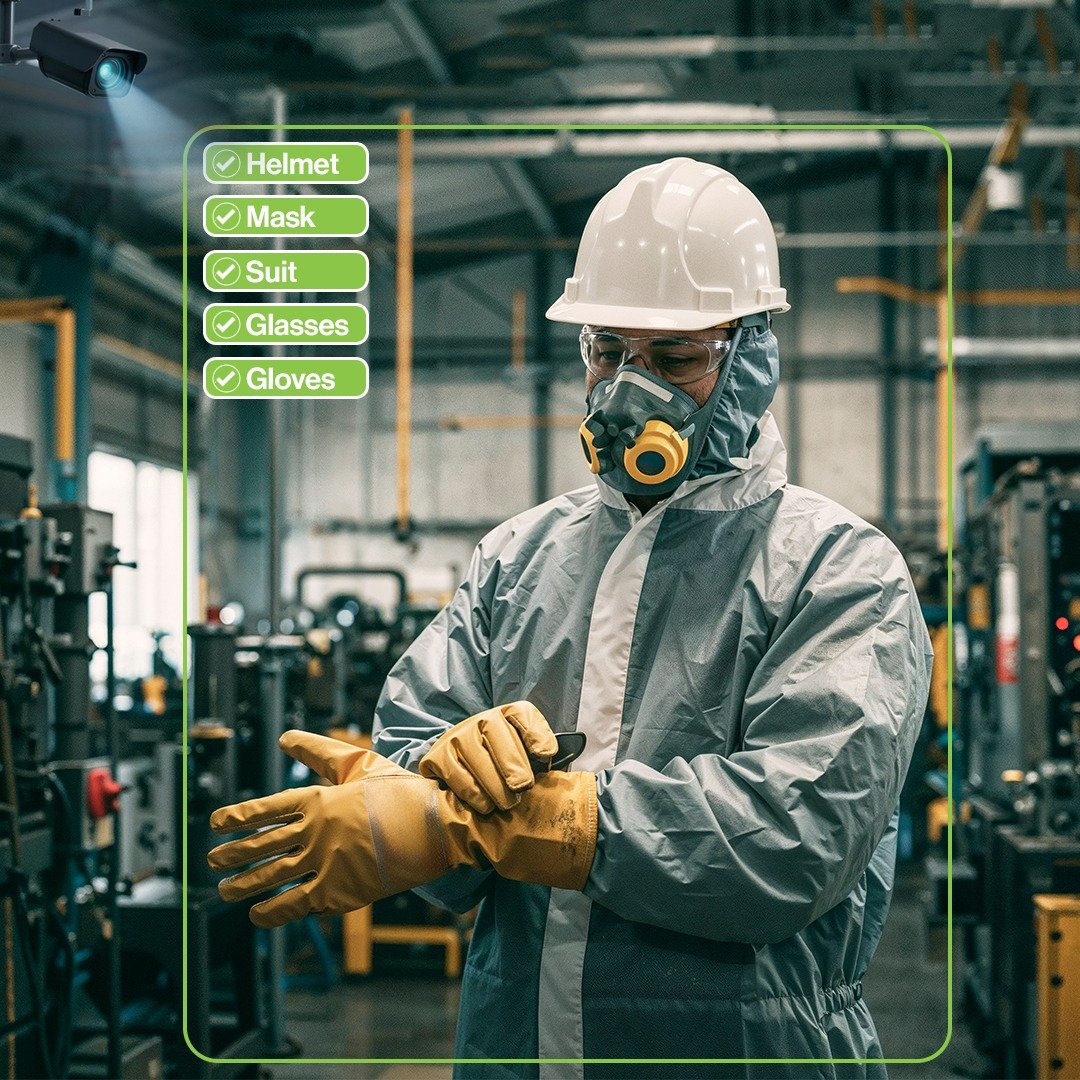
The core of an intelligent vision system involves training machine learning models on thousands of images. This specialized training ensures that PPE detection with AI video analytics is accurate even in complex environments. To summarize, the machine learning capabilities of an ai camera allow for the automated enforcement of complex safety rules.
Scene Recognition and Object Detection
Beyond simple movement detection, an AI powered CCTV performs scene recognition to understand the context of an operation. It can help in multiple areas for example, housekeeping, detecting spill zones where any environment hazard poses a safety risk, or monitor for vehicle-to-human proximity ensuring the workplace stays accident free, but most important of all, it can capture and analyze ‘near miss’ areas, where accidents are likelier to occur due to missed issues (like a slippery surface or a blind corner).
Real-Time Image Processing with Artificial Intelligence
By smart analysis, the AI CCTV system can notify with dashboard alerts or mobile app notifications the moment a violation occurs. This ensures that safety officers can react to a workplace accident or incident immediately. In conclusion, real-time processing turns a passive recording device into an active life-saving tool.
Benefits of AI Cameras for Industrial Safety and Operations
The primary benefit of deploying a smart camera is the significant improvement in HSE compliance and the reduction of on-site injuries. Automated monitoring ensures that safety protocols are followed consistently across all shifts, regardless of human presence. Furthermore, an AI enabled smart camera improves vehicle entrance management by tracking arrival times and gate pass compliance. This comprehensive approach to proactive versus reactive safety management creates a resilient operational foundation. To sum it up, the benefits of automated vision systems include both enhanced safety and optimized operational flow.
Common Use Cases of AI Camera Technology
Gate Safety and Vehicle Entrance Management
Automatic Number Plate Recognition (ANPR) streamlines the entry and exit of heavy vehicles. The system verifies gate pass compliance and monitors vehicle speed within the facility grounds to prevent collisions. This level of safety ensures only authorized vehicles enter high-traffic zones. All in all, this feature of ANPR with AI CCTV automated gate management reduces administrative bottlenecks and enhances site security.
Warehouse and PPE Compliance Monitoring
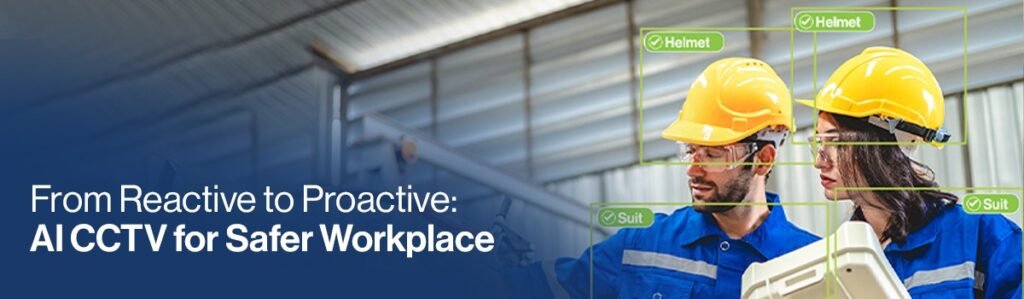
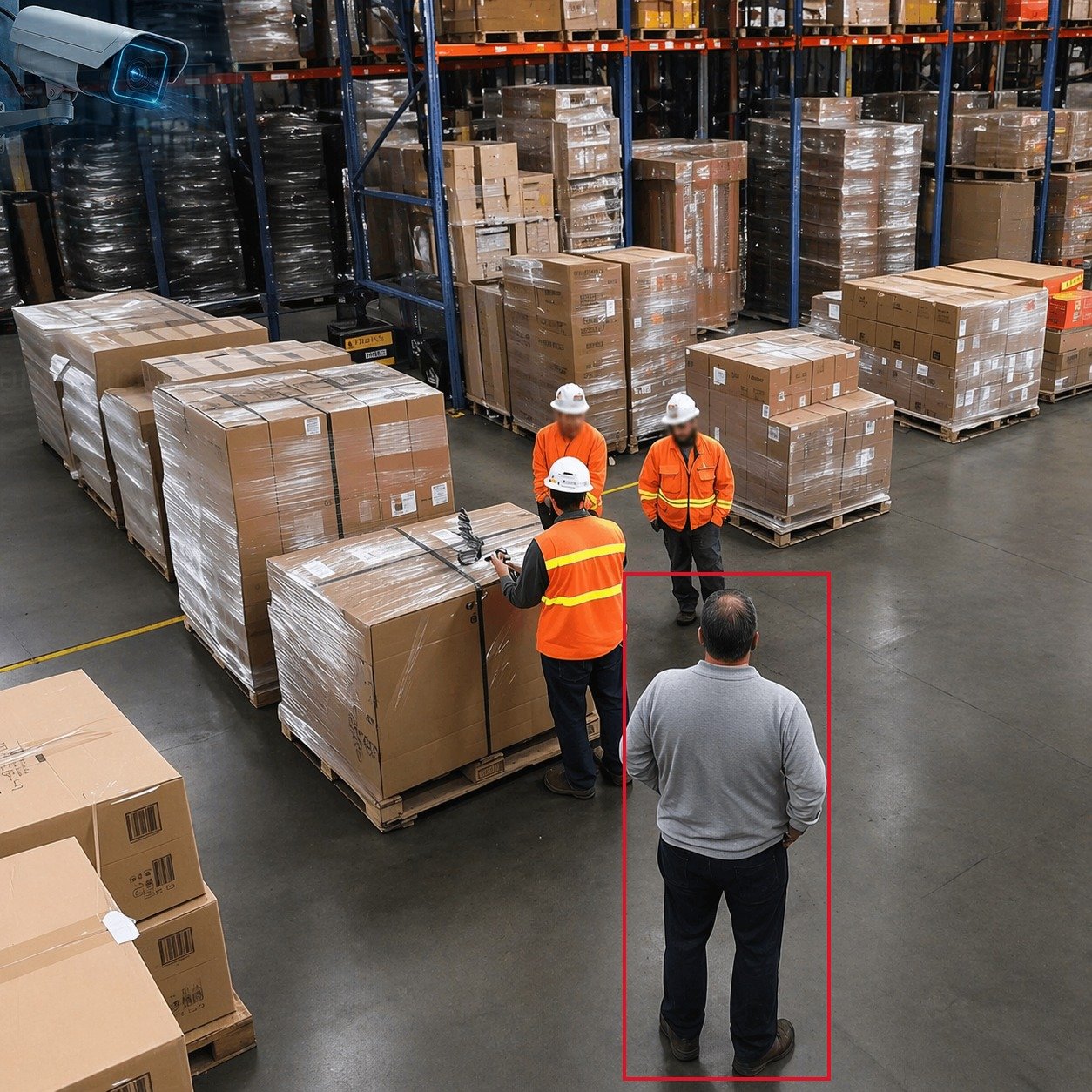
Maintaining high occupational health and safety standards in warehouses requires constant PPE audits. An intelligent vision system automatically detects if workers are wearing helmets, high-visibility vests, and appropriate footwear. This use case is a cornerstone of the safety industrial solutions deployed by The Disrupt Labs. In short, automated PPE monitoring ensures 100% compliance without the need for constant manual checks.
Forklift and Vehicle Safety Monitoring
A smart camera is instrumental in preventing forklift-related accidents by creating virtual “exclusion zones” around machinery. If a pedestrian enters a forklift’s path, the system can trigger a real-time alert to both the driver and the safety manager. This workplace safety technology is vital for high-speed logistics centers where visibility is often limited. So as we can see, proximity detection is an essential feature for reducing machinery-related injuries and AI CCTV can help.
Restricted Area and Hazard Detection
An ai enabled camera monitors sensitive areas such as chemical storage units or electrical rooms for unauthorized access. Additionally, the system can be trained to detect housekeeping hazards, such as oil spills or debris in walkways, which are primary causes of trips and falls. In conclusion, hazard detection allows facilities to maintain pristine safety standards automatically.
AI Cameras for Real-Time Safety Monitoring and Alerts
The integration of AI powered CCTV into a factory’s ecosystem allows for instantaneous violation detection. Rather than reviewing footage hours after an event, managers receive proactive alerts that enable immediate intervention. This shift is a key component of transforming workplace safety and ensures that safety managers can focus on high-level strategy rather than routine observation. In a nutshell, real-time alerts are the most effective way to manage site-wide safety through automated vision.
Measuring ROI of AI Camera Systems in Industrial Safety
Investing in a Vision AI provides a clear return on investment by lowering operational costs and insurance premiums. By reducing the frequency of accidents, companies avoid the massive direct and indirect costs associated with workplace injuries. In short, the business value of an AI based camera extends far beyond simple safety, offering a robust economic advantage for modern industries.
Conclusion
As industrial environments grow more complex, the need for automated oversight becomes undeniable. Transitioning to a professional AI based intelligent vision system infrastructure allows companies to protect their workforce while driving higher operational efficiency. By embracing the power of Vision AI, organizations can move toward a zero-accident future and set new benchmarks for excellence. With the Disrupt Labs Vision AI solution, your facility remains safer, compliant, and operationally up-to-date.
Protect your facility and enhance your EHS compliance today— Contact us and explore the full range of solutions from The Disrupt Labs.
Frequently Asked Questions
AI-powered CCTV helps by continuously monitoring for hazards, ensuring PPE compliance, and providing real-time alerts for unsafe conditions.
AI systems analyze CCTV footage to ensure that workers are consistently using their PPE equipment and immediately alert supervisors when violations occur.
The Disrupt Labs provides AI-driven solutions that monitor critical areas, generate real-time alerts for safety teams, and support the implementation of effective safety measures.

Wafa Zehra
She brings together her expertise in business development and content strategy to showcase the growing role of computer vision AI in enhancing workplace safety and HSE/EHS compliance. At The Disrupt Labs, she focuses on writing insightful content that explores AI-driven innovations and their impact on industrial safety.
View all posts