How to Improve Workplace Safety: Strategies, Hazards, and Smart Technology Solutions
Understanding Workplace Safety in Modern Industrial Environments
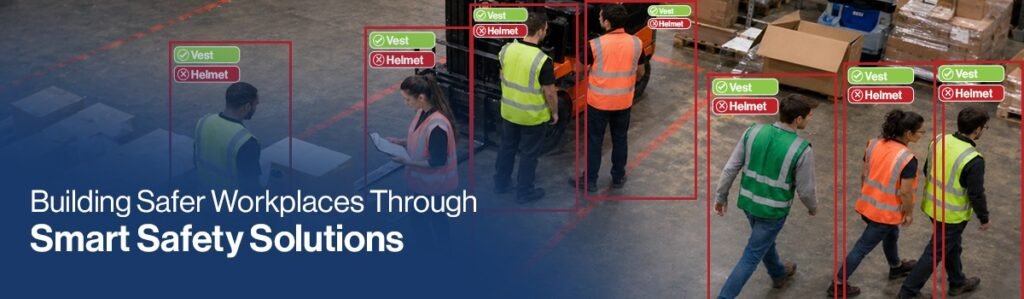
In the high-pressure landscape of 2026, the question of how to improve workplace safety has shifted from a manual checklist to a digital imperative. Modern industrial environments are increasingly complex, involving high-speed machinery and multi-shift operations where human oversight alone is no longer sufficient. By integrating visual intelligence and real-time monitoring into daily operations, facilities are moving beyond static posters and into a new era of automated awareness.
What Is Workplace Safety?
When asking what is workplace safety, it is best defined as a comprehensive framework of protocols and physical safeguards designed to protect the health and well-being of every person on-site. It isn’t just about following rules; it is an operational heartbeat that ensures production continues without the interruption of injury or equipment failure.
Why Workplace Safety Is Critical in Industrial Operations
In heavy industry, the margin for error is nearly zero. A single lapse doesn’t just result in an incident report; it causes significant downtime, legal liability, and profound human cost. According to OSHA statistics, the ‘Fatal Four’ problems that pose workplace hazards are: falls, electrocutions, being struck by objects, and getting caught in between machinery. In this environment, establishing robust occupational health and safety (OHSA) standards is the only way to sustain long-term business resilience and worker trust.
Common Workplace Hazards in Industrial Facilities
Identifying what are common workplace hazards is the first step in moving from a reactive posture to a proactive one. In large-scale warehouses and factories, risks often hide in the repetitive actions of a busy workday.
Physical Hazards (Machinery, Vehicles, Slips & Falls)
The most visible threats involve heavy machinery and moving vehicles. However, environmental factors like liquid spills or floor debris are equally dangerous. These slip, trip, and fall hazards often go unnoticed by busy supervisors until an accident occurs.
Unsafe Behaviors and Human Error
Even with the best training, human error remains a constant variable. Fatigue, distraction, or the temptation to take a “shortcut” through a restricted zone leads to overlooked safety issues that traditional cameras record but cannot prevent.
High-Risk Zones (Warehouses, Production Lines, Gate Areas)
Specific areas like loading docks and high-voltage zones require constant vigilance. These are the locations where pedestrians and forklifts most often cross paths, creating a volatile environment that demands more than just a yellow line on the floor for protection.
The Disrupt Labs Vision AI solutions instantly detect and prevent hazards like liquid spills, floor debris, and blocked emergency exits to prevent slip, trip, and fall accidents.
The solution also enforces dynamic proximity alerts and restricted zone monitoring, providing real-time warnings to prevent collisions between pedestrians and heavy machinery like forklifts.
Benefits of AI Cameras for Industrial Safety and Operations
The core problem with manual oversight is that it is inherently forensic – it tells you why something went wrong after the damage is already done. This “passive” approach is the primary barrier for those looking at how to improve workplace safety effectively.
Gaps in Manual Supervision
A safety officer cannot be in every aisle of a 300,000-square-foot facility simultaneously. This creates “dark zones” where unsafe behaviors become habits because no one is watching. Manual monitoring is inconsistent and prone to the natural fatigue of the human eye.
Delayed Incident Detection and Reporting
When a hazard is detected through a manual walkthrough or a weekly video review, it is usually too late. This reactive management style means that intervention happens in the aftermath, rather than in the “Golden Minutes” before a hazard escalates into an injury.
AI-Powered Workplace Safety Solutions by The Disrupt Labs
At The Disrupt Labs, we bridge these gaps by providing digital “eyes” that never blink. Our Vision AI Solutions turns existing CCTV infrastructure into an intelligent network that actively manages risk, as seen in our work transforming safety for Unilever.
PPE Compliance Monitoring Using Vision AI
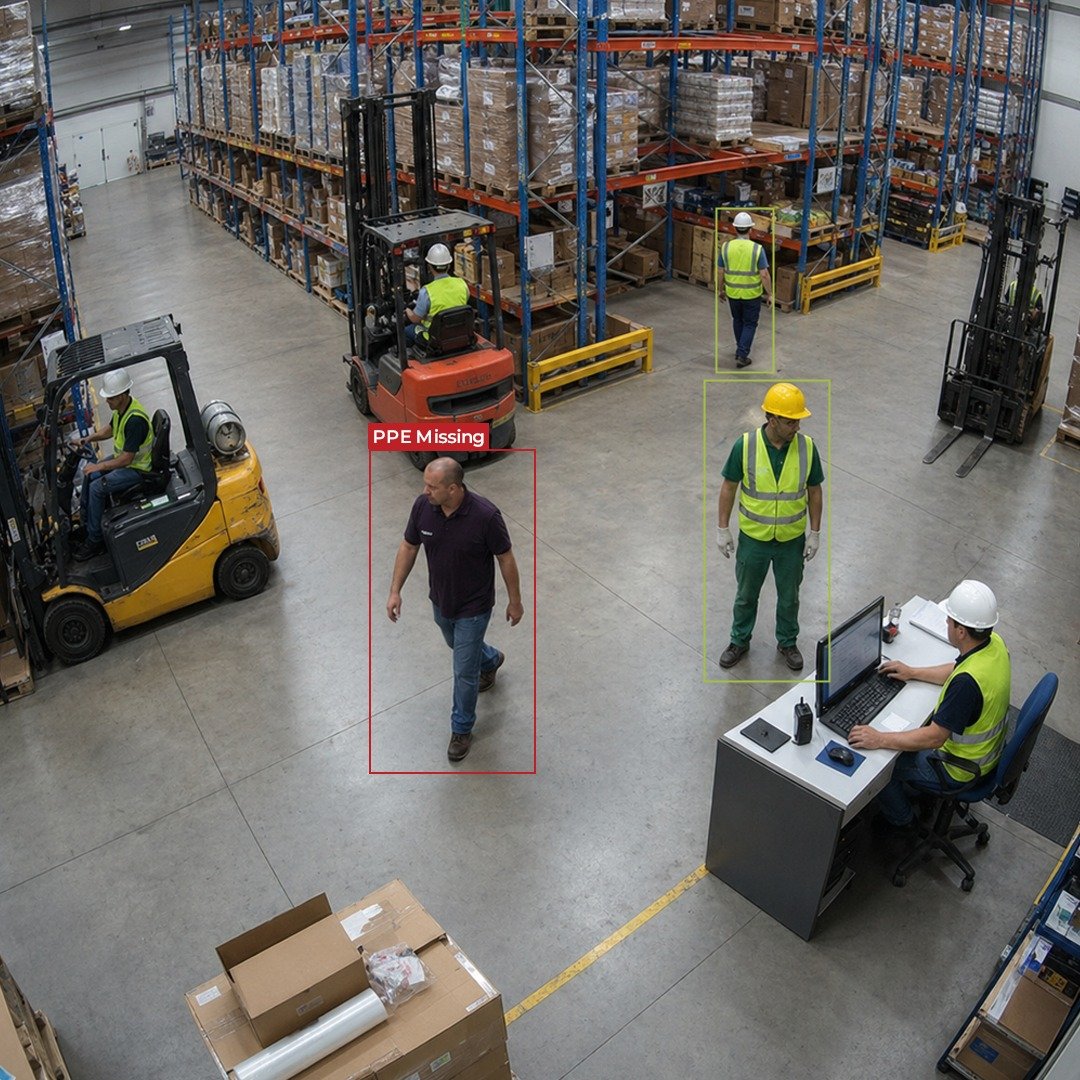
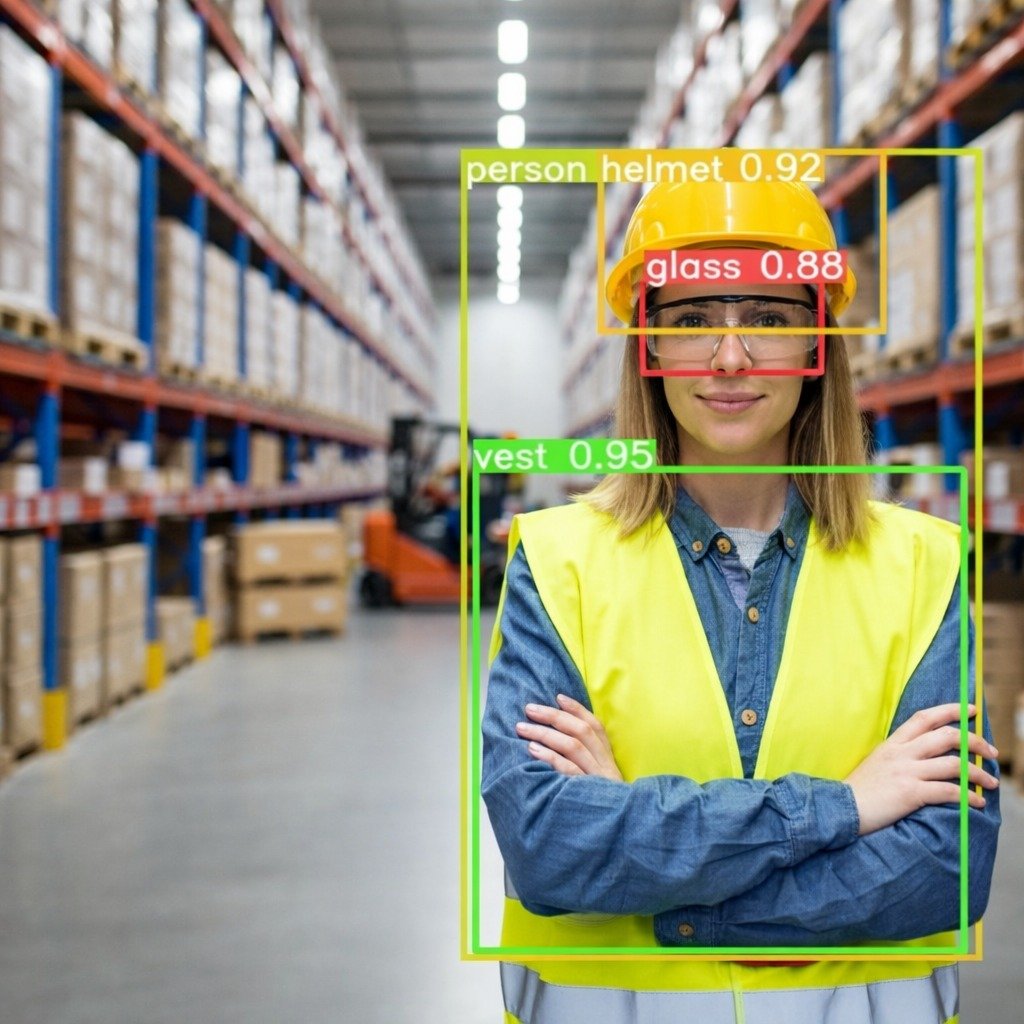
Nagging employees about hard hats and vests is a drain on management resources. Our PPE detection analytics automates this process, identifying violations in real-time and allowing for consistent, objective enforcement without constant human policing.
Vehicle Entrance Management & Gate Pass Compliance
Logistics hubs face constant pressure at the gate. By digitizing entry and monitoring vehicle speeds through AI, we ensure that only authorized, compliant transport enters your facility, reducing the risk of collisions in high-traffic zones.
Forklift Safety and Proximity Detection
Forklift accidents are among the most severe in warehouse environments. We solve this by monitoring through the use of Vision AI safety technology. The system alerts both the operator and pedestrians when they get too close, providing a mechanical safety net that compensates for human distraction.
Real-Time Hazard Detection Using AI CCTV
Instead of using your cameras for playback, we use them for prevention. Whether it is identifying a person in a restricted zone or detecting a dangerous spill, our AI CCTV modules provide the instant awareness needed to keep operations moving safely.
EHS compliance is the operational backbone of industrial integrity, ensuring that every worker returns home safely while shielding the organization from the staggering legal and financial fallout of workplace accidents. By automating oversight through Vision AI, businesses move beyond reactive box-ticking to a proactive “Zero-Harm” culture that guarantees 24/7 accountability and operational excellence.
How AI Improves Workplace Safety in Real Time
Understanding how technology improves workplace safety is about recognizing the power of immediate data. When an AI system monitors a facility, it processes information in milliseconds, providing a level of responsiveness that humans cannot match.
Continuous Monitoring Through Existing CCTV Cameras
The most efficient way to upgrade your site is to leverage your current hardware. By adding an AI layer to your existing cameras, you gain 24/7 oversight across the entire floor, ensuring that safety is always “on.”
Real-Time Alerts for Safety Violations
The true value of AI lies in the alert. When a hazard is detected, the system sends an immediate notification to safety dashboards or mobile App. This is how to improve workplace safety through action: giving managers the chance to stop a dangerous behavior before it results in a casualty.
Data-Driven Insights for Risk Reduction
Beyond individual alerts, AI provides a roadmap for training. By analyzing trends – such as which shift has the most PPE violations – safety managers can use Dashboard or Mobile App to focus on areas that require their attention the most.
Key Workplace Safety Measures Enhanced by AI
When implementing what are workplace safety measures, automation ensures they are actually followed. It takes the “maybe” out of compliance.
1. Automated PPE Compliance Tracking
Instead of periodic checks, AI provides a 100% audit trail. This constant tracking creates a culture where safety gear is second nature because the system never misses a violation.
2. Monitoring Safety SOPs and Restricted Zones
Standard Operating Procedures (SOPs) are only effective if they are followed. AI monitors for “action-based” violations, such as someone entering a high-voltage room or walking through a designated forklift lane, ensuring that restricted areas stay restricted.
3. Faster Emergency Response with Dashboards & Real-time Alerts
In the event of an incident, every second counts. Real-time dashboards provide safety teams with the exact location and nature of the hazard, allowing for an immediate response that can significantly reduce the severity of an injury.
Preventing Workplace Accidents with Vision AI
Learning how to prevent workplace accidents is a journey from forensic review to predictive intelligence. By catching the “near-misses,” we eliminate the accidents of tomorrow.
Early Hazard Detection and Intervention
Most accidents have warning signs – a spill that wasn’t cleaned, a worker who forgot their gloves, or a forklift driving too fast. AI catches these early indicators, allowing for an intervention that stops the accident before it begins.
Reducing Human Error Through Automation
Automation doesn’t replace workers; it supports them. By handling the monotonous task of monitoring, the technology reduces the “decision fatigue” of supervisors, ensuring that nothing slips through the cracks, which is a great support when the focus is on how to improve workplace safety.
Building a Proactive Safety Culture
When workers know that safety is being monitored objectively and consistently, it changes the culture. It moves the conversation from “getting caught” to “staying safe,” reducing the overall count of workplace accidents and incidents.
Business Benefits of AI-Driven Workplace Safety
Finally, the question of how to improve workplace safety is also a business question. A safer site is a more profitable site. The Disrupt Labs improves workplace safety by deploying an AI-powered CCTV that automates the enforcement of over 30+ EHS (Environment, Health, and Safety) rules.
Reduced Incidents and Operational Risks
By drastically reducing the frequency of injuries, companies lower their insurance premiums, avoid regulatory fines, and eliminate the downtime associated with accident investigations. At The Disrupt Labs we transform the workplace safety of your business, by preventing accidents before they happen.
Increased Efficiency and Visibility Across Operations
By automating the monitoring of workplace safety, safety managers are free from the role of policing employees and can focus on leadership and strategic improvement. This increases operational visibility, allowing for better-informed decisions that drive long-term efficiency.
Conclusion
The transition from reactive safety to proactive prevention is no longer a futuristic concept; it is a 2026 industrial standard. Traditional methods have served their purpose, but in a world of increasing operational speed and complexity, they are no longer sufficient to guarantee workplace safety.
Take the first step towards a secure and sophisticated ecosystem that engineers the “Zero-Harm” workplace. We empower your team to stop looking at what went wrong and start seeing what could go wrong, neutralizing risks before they ever become a statistic.
Frequently Asked Questions
The first step is a hazard audit. We recommend identifying your "dark zones" - areas where supervisors aren't always present - and upgrading your CCTV to provide 24/7 coverage.
It is the transition from manual, human-led inspections to automated visual intelligence. It means your safety protocols are enforced by software that detects risks in seconds.
You can integrate AI software with your current CCTV to detect slips, trips, and falls or unauthorized zone entries, sending alerts before an injury occurs.
AI can automate PPE checks, forklift proximity alerts, restricted area monitoring, and vehicle speed compliance, ensuring SOPs are followed without constant human intervention.
Yes. By catching "near-misses" and providing real-time alerts, companies avoid the legal fees, insurance hikes, and downtime associated with major industrial incidents.

Wafa Zehra
She brings together her expertise in business development and content strategy to showcase the growing role of computer vision AI in enhancing workplace safety and HSE/EHS compliance. At The Disrupt Labs, she focuses on writing insightful content that explores AI-driven innovations and their impact on industrial safety.
View all posts