
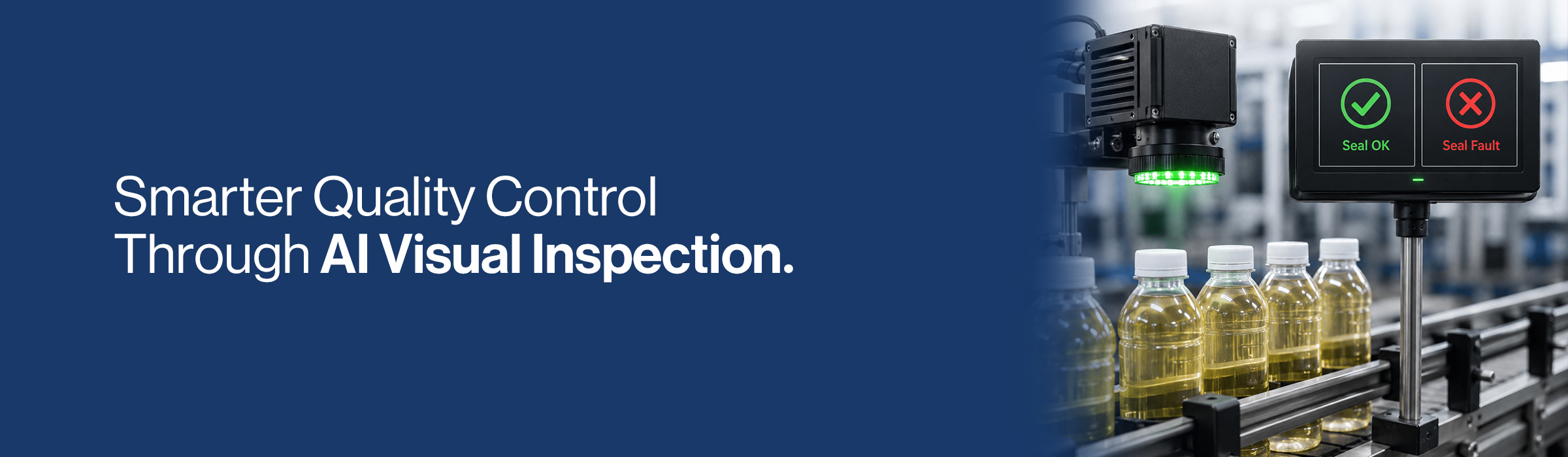
Automated Visual Inspection: How AI Is Transforming Manufacturing Quality Control
Introduction
Manufacturing quality control has always been a balance between speed and precision. As production volumes increase and product complexity grows, manual inspection struggles to keep pace. A human inspector catching every defect on a high-speed production line across a full shift is simply not a realistic expectation at scale. AI-powered visual inspection solves this issue by introducing automated defect detection and AI quality control.
The demand for consistent, high-throughput quality control is driving rapid adoption of intelligent Vision AI technology across manufacturing sectors. It uses machine vision cameras, layered with AI-based software solutions, and real-time image analysis to detect defects at production speed, without the fatigue, inconsistency, or coverage gaps that characterize manual processes. This blog explains how it works, what it can detect, and where The Disrupt Labs applies it in practice.
What Is Automated Visual Inspection?
Automated visual inspection is the use of digital cameras, specialized lighting, and computer software to examine products, surfaces, and components automatically during or after production.
Unlike manual inspection, which depends on individual attentiveness and is subject to fatigue and shift-to-shift variability, the system applies the same detection criteria to every item at consistent speed throughout the production run. According to NIST, across the broader manufacturing industry, these systems routinely drop inspection cycle times from minutes down to fractions of a second per unit.
The difference from manual inspection is not simply one of speed. It is a difference in the underlying data. Manual inspection produces pass/fail decisions that are rarely documented systematically. Automated inspection produces a timestamped, structured record of every check, every detection, and every trend across products, variants, and time periods. That data is what makes quality improvement measurable rather than anecdotal.
How AI Visual Inspection Works
At the system level, this inspection workflow follows a consistent structure regardless of the specific use case or industry.
Industrial cameras are positioned at inspection points along the production line, configured with appropriate lighting, lensing, and field of view for the product being inspected. Stable imaging is the foundation: if the image quality is inconsistent, model performance will suffer regardless of how advanced the AI is.
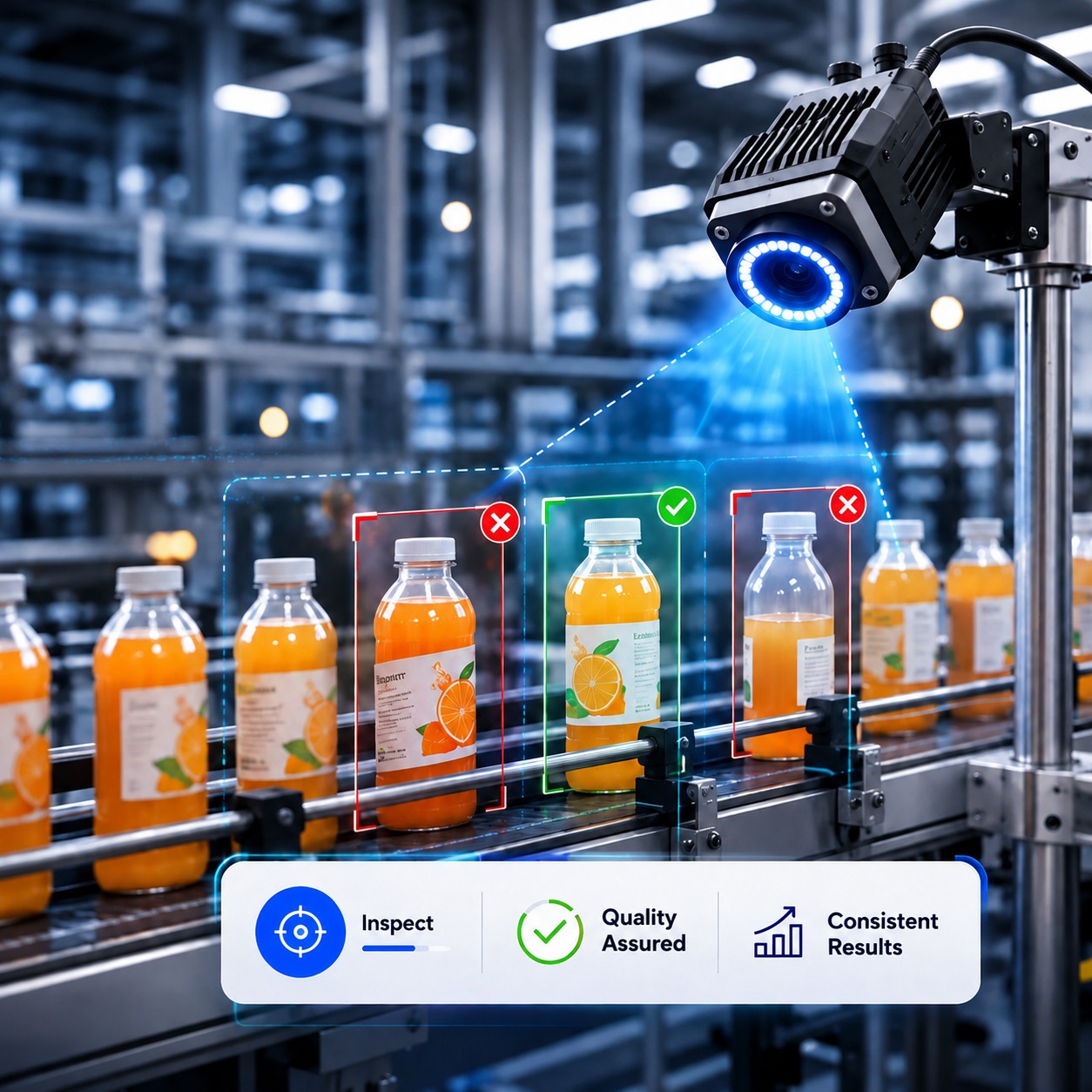
The intelligent AI software then analyzes captured images frame by frame, identifying objects, surfaces, and features and comparing them against learned standards of acceptability. Vision AI is trained on datasets that include clean product samples, known defect examples, and acceptable variation, which is what allows them to distinguish a genuine flaw from normal material variation on a textured or reflective surface.
Image recognition at this level enables real-time defect detection: the system evaluates each item as it passes through the inspection point and generates a pass, fail, or review result within milliseconds. When a defect is detected, the result is logged automatically and an alert is delivered to the relevant operator via dashboard with the item routed for rejection or human review depending on the configured workflow.
So to summarize, The Disrupt Labs’ Vision AI automated inspection systems do more than spot defects; they help teams understand what is happening on the line, which defect types are increasing, which product variants are causing trouble, where false rejects are coming from, and whether quality is improving over time.
Types of Defects AI Can Detect
The range of what automated visual inspection systems can detect is broader than most people expect when they first encounter the technology. The Disrupt Labs’ solutions’ capability, documented across deployments, covers the following categories:
Packaging defects
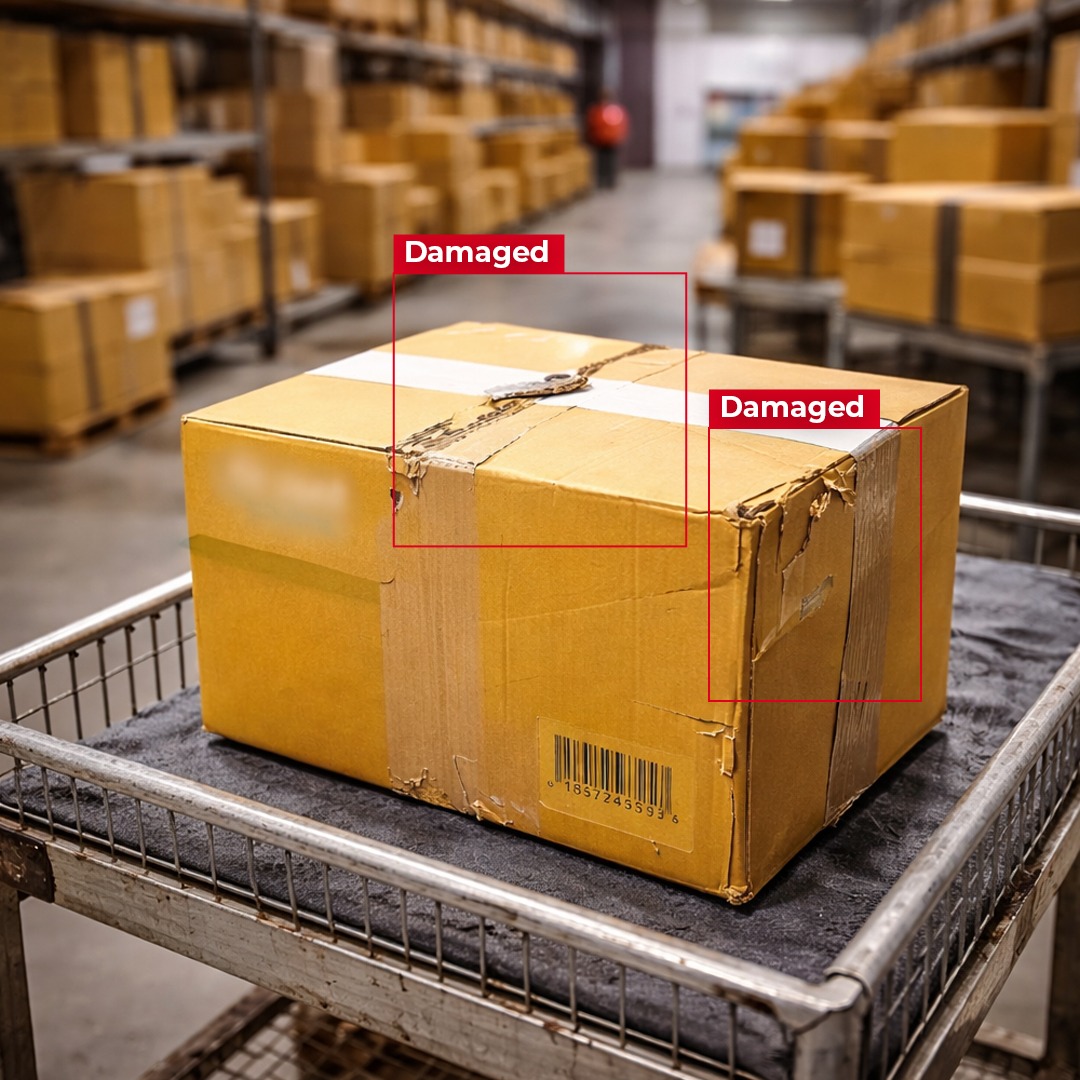
Damaged, deformed, or incorrectly assembled packaging that would affect product integrity or presentation on shelf.
Label verification
Confirming that the correct label is present, correctly positioned, legible, and undamaged, including barcode readability and QR code verification.
Cap and closure inspection
Verifying that caps, lids, and seals are correctly applied, properly torqued, and fully sealed, catching underfills, cross-threaded closures, and missing seals.
Barcode scanning
Reading and validating barcodes and data codes against product specifications, ensuring traceability and inventory accuracy.
Product dimensioning and counting
Measuring product dimensions against tolerance specifications and verifying counts in packaging or palletizing applications.
Color inconsistencies
Detecting off-color batches, faded prints, incorrect ink coverage, and color variation outside acceptable tolerance ranges.
Product defect detection
Identifying surface flaws including scratches, cracks, dents, contamination, inclusions, bubbles, and coating defects across a wide range of materials and finishes.
Benefits of Automated Visual Inspection
The operational case for AI visual inspection rests on several measurable outcomes that manual processes cannot match at scale.
Higher accuracy
Vision AI applies consistent criteria to every item detected defects that human inspectors miss, particularly subtle surface flaws, minor dimensional variations, and defects that appear infrequently enough that inspectors become desensitized to them over the course of a shift.
Faster inspections
Smart AI inspection operates at production line speed, eliminating the throughput constraint that manual inspection creates when production volumes increase.
Reduced waste
Catching defects earlier in the production process, before further value is added downstream, significantly reduces the material and labor cost of rework and scrap. This is directly relevant to quality control in pharma and FMCG where material costs are high.
Lower labor costs
Redeploying inspection staff from repetitive visual checks to higher-value quality analysis and process improvement work reduces labor costs while making better use of experienced personnel.
Consistent quality
Unlike manual inspection, which varies with fatigue, shift changes, and individual judgment, automated inspection applies the same standard every time, generating a consistent quality baseline that customers and regulators can rely on.
Improved workplace safety
Vision AI improves workplace safety by using computer vision to monitor live video feeds and detect hazards in real time. It ensures personal protective equipment compliance, enforces exclusion zones, and prevents heavy machinery collisions. This continuous surveillance transforms safety operations from a reactive response into a proactive, data-driven prevention strategy.
Industries Using Automated Inspection
Automated inspection is transforming how industries maintain quality, accuracy, and operational efficiency. By using Vision AI to inspect products and processes in real time, organizations can detect defects earlier, improve consistency, and reduce reliance on manual inspections.
From manufacturing and pharmaceuticals to food processing and textiles, معامل الاضطراب helps businesses automate quality inspection with intelligent computer vision solutions that support higher production standards, minimize waste, and drive continuous operational improvement.
Conclusion
Automated visual inspection is not a future consideration for manufacturing quality teams. It is a production-ready technology delivering measurable outcomes across industries that have already adopted it.
Implementing automated visual inspection means faster detection, lower defect escape rates, reduced rework costs, and a structured quality data record that supports both regulatory compliance and continuous improvement.
The Disrupt Labs solution is configured to the specific defect categories, production speeds, and quality standards of each facility. The platform generates detection data, compliance records, and trend analytics that move quality control from a reactive function to a proactive one.
Contact The Disrupt Labs to discuss how Vision AI quality inspection can strengthen quality control in your facility.
Frequently Asked Questions
Vision AI analyzes visual data to detect defects, inconsistencies, and quality issues with high accuracy. It enables faster inspections, improves product consistency, and supports real-time decision-making.
Automated visual inspection improves manufacturing quality control by delivering higher accuracy, faster processing speeds, and continuous operation without human fatigue.
The Disrupt Labs' inspection solution detects defects, verifies components, and generates structured quality records without manual observation.
Higher accuracy, faster production-line speed, reduced waste and rework costs, lower labor costs, and a consistent, reliable quality baseline.

وفاء زهرة
She brings together her expertise in business development and content strategy to showcase the growing role of computer vision AI in enhancing workplace safety and HSE/EHS compliance. At The Disrupt Labs, she focuses on writing insightful content that explores AI-driven innovations and their impact on industrial safety.
View all posts