How AI Is Transforming Industrial Safety Standards and Compliance
The traditional blueprint for industrial safety standards has always been ‘post-incident’. For decades, EHS managers have relied on a ‘rear-view mirror’ approach: an incident occurs, a manual audit is conducted, and a checklist is updated. But in high-risk environments, a checklist is only as good as the personnel monitoring it. With the rise of digital transformation, the definition of what is industrial safety has evolved from a set of static rules into a dynamic, “always-on” ecosystem of intelligence.
Understanding Industrial Safety Standards in Modern Operations
What Are Industrial Safety Standards and Why They Matter
At their core, occupational and industrial safety standards are the regulatory and operational frameworks – such as those defined by OSHA or ISO – designed to protect workers from the inherent risks of industrial environments. They exist to minimize human error and equipment failure, providing a baseline for acceptable risk. However, the importance of industrial safety goes beyond mere checkboxes; it is the foundation of institutional trust and worker well-being.
From Traditional Compliance to Intelligent Safety Systems
Traditional compliance is a snapshot in time. An auditor walks the floor for an hour, but the risks remain for the other twenty-three. We are now entering an era where safety rules in industry are enforced not by periodic walks, but by continuous, real-time monitoring. By integrating Vision AI with existing infrastructure, facilities are transforming passive CCTV into active safety partners that detect deviations the second they happen.
From Traditional Compliance to Intelligent Safety Systems
In sectors like oil and gas, heavy manufacturing, and chemicals, a single lapse in industrial safety regulations can be catastrophic.
- Reducing Workplace Hazards and Safety Incidents: High-risk zones are prone to ‘silent risks’, which means the moment a worker removes a helmet in a hot zone or a forklift speeds through a blind corner.
- Strengthening Compliance and Audit Readiness: Many companies fail not because they lack regulations, but because they fail to apply them consistently. AI provides the “digital audit trail” necessary to prove compliance 24/7.
- Improving Operational Efficiency: A safer workplace is a more efficient one. By reducing “recordable incidents,” companies avoid the costly downtime and legal friction that follow workplace accidents.
Core Industrial Safety Standards Supported by AI Monitoring
To truly master the new and improving benchmarks of safety standards across various industries, technology must address the three pillars of operational risk:
1. PPE Compliance and Safe Work Practices
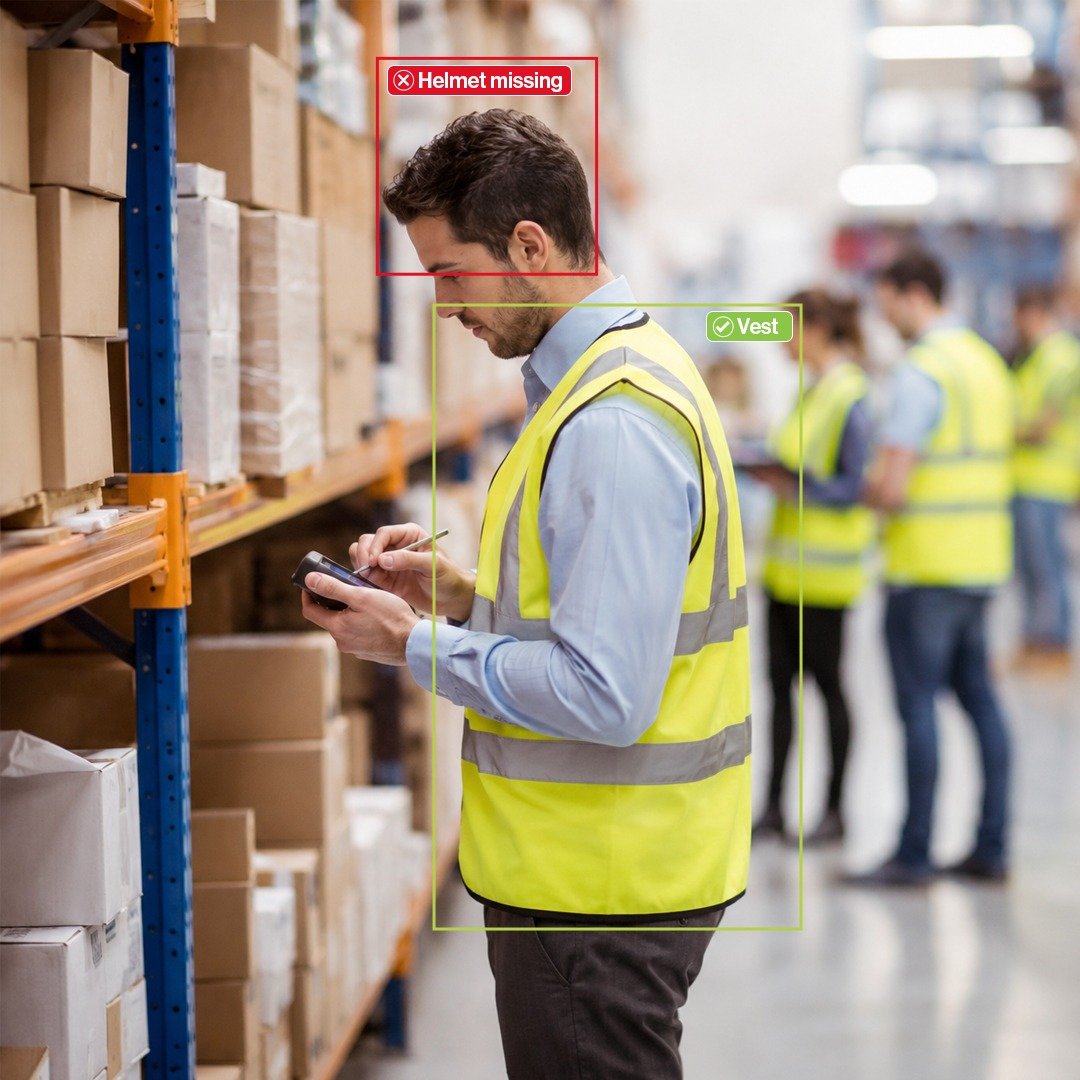
Ensuring the correct industrial safety equipment is worn is a constant struggle for safety leads. AI models can now instantly identify missing helmets, vests, or gloves across an entire facility.
2. Vehicle, Forklift and Restricted Zone Safety Controls
Standard safety rules in industry dictate clear separation between pedestrians and heavy machinery. Vision AI enforces this by monitoring moving or static forklifts and restricted production zones. Even in case of any near misses, the flagged incident is then sent as real-time alerts, visible on the dashboard and SafetyLens App.
3. Emergency and Hazard Monitoring Requirements
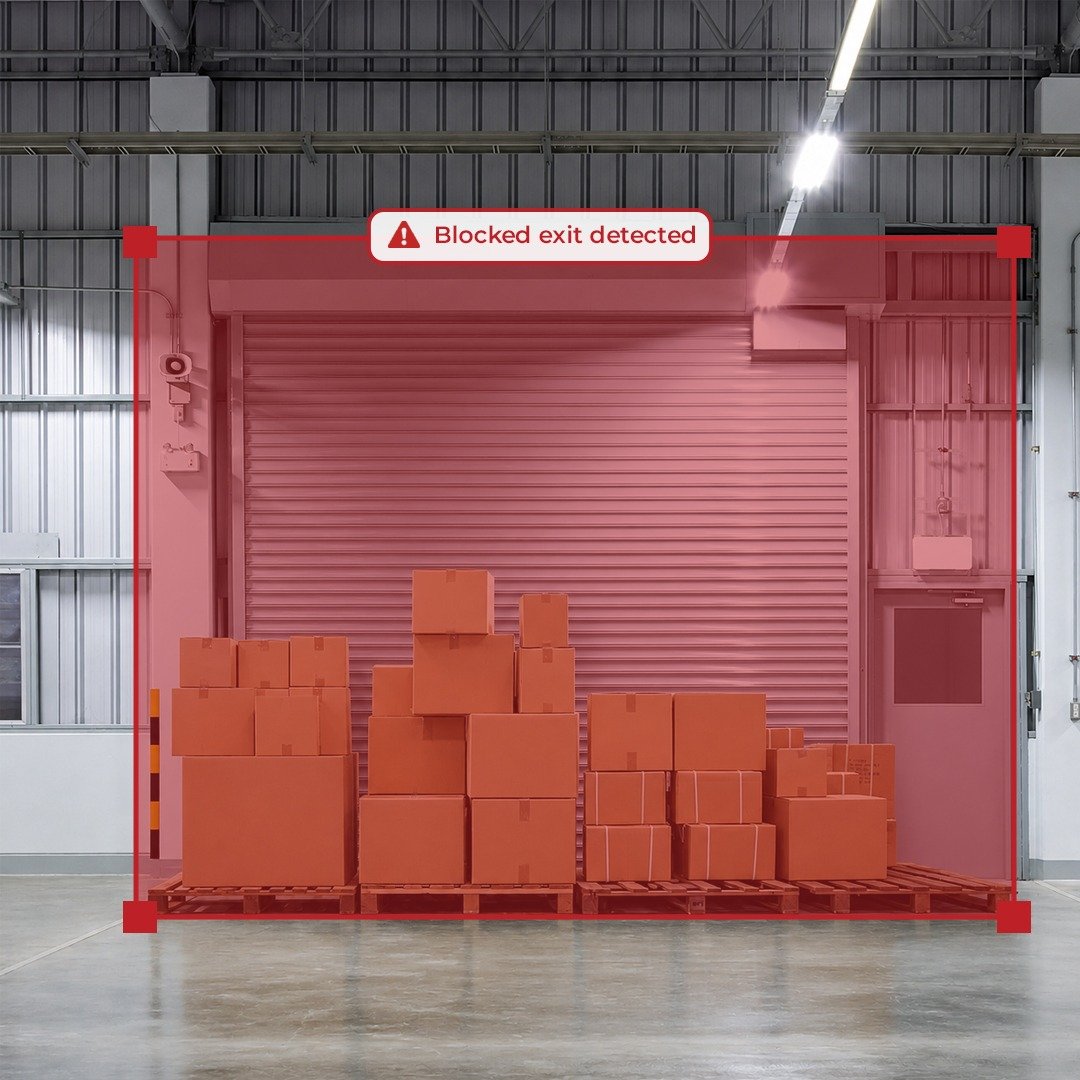
Effective industrial fire safety and emergency response depend on clear pathways. AI CCTV detects blocked emergency exits or unauthorized storage in emergency lanes in real-time, ensuring the facility is free of violations, always ready to handle a crisis or an emergency.
AI-Powered Industrial Safety Solutions by The Disrupt Labs
At The Disrupt Labs, we don’t simply provide software; we provide a solution that keeps improving as it tailors itself to your business requirements. This not only makes it easy to audit EHS teams, but with our continued support, it simplifies the needs of businesses looking to scale up their operations or even adhere their facilities to strict protocols for quality assurance.
Our PPE module monitors every entry point and work zone, flagging non-compliance instantly to prevent injuries before they occur. By adopting an AI-powered PPE Compliance Monitoring System, ensuring real-time oversight of protective equipment usage.
Forklift–Pedestrian Proximity and Collision Risk Detection
We solve the most common warehouse headache: the forklift collision. AI driven CCTV identifies proximity risks between humans and vehicles, triggering alerts before a near-miss becomes a tragedy.
Our “Housekeeping Module” ensures that industrial safety standards are never compromised by stray pallets or equipment blocking critical exit routes. AI-based cameras are used to continuously monitor emergency exits; if the objects cover the exit area, a notification is generated to the centralized dashboard and the problem is proactively flagged.
How Technology Is Strengthening Industrial Safety Standards
Modern occupational safety regulations are no longer limited by human fatigue.
- Computer Vision for Real-Time Hazard Detection: Unlike humans, AI doesn’t get tired. It processes every frame of video to spot liquid spills, or unsafe behaviors.
- Automated Safety Alerts and Incident Prevention: Through the dashboard and mobile app, supervisors receive instant push notifications the moment a violation occurs.
- Using Existing CCTV for Continuous Compliance Monitoring: There is no need for a massive hardware overhaul. The Disrupt Labs integrates directly with your existing camera network to provide continuous compliance.
Industrial Safety Applications Across Key Industries
- Manufacturing and Heavy Industry
Monitoring machine guarding and heavy equipment proximity is a critical component of modern industrial safety, shifting the focus from physical barriers alone to intelligent, real-time prevention systems. The technology detects when workers are standing in dangerous proximity to active machinery without proper protocols or in restricted/danger zones, providing a safety net that can help mitigate human error and ensure employee safety.
- Pharmaceutical and Chemical Facility Compliance
In environments where chemical exposure or contamination is a constant threat, job site safety requirements are exceptionally stringent. Vision AI supports these facilities by enforcing hygiene protocols, such as mask and glove compliance, and monitoring hazardous material handling areas. By automating these checks, pharmaceutical leaders can ensure that “Safety SOPs” are followed, protecting both the product integrity and the workforce.
Warehousing and Logistics Safety Monitoring
The high-velocity nature of logistics makes it a hotspot for forklift-related injuries. AI strengthens occupational safety standards in warehouses. Furthermore, automated monitoring of truck docking stations ensures that vehicles are secured and SOPs are met before loading begins, closing the gap where manual oversight often fails.
Building a Proactive Safety Culture with AI and Compliance Intelligence
Moving from Reactive Safety to Predictive Prevention
The traditional approach to employee safety requirements is reactive: investigating what went wrong after the damage is done. AI allows organizations to flip the script. By analyzing thousands of hours of footage, the system identifies “near-miss” trends and behavioral patterns. This predictive intelligence allows EHS teams to intervene with training or infrastructure changes before a trend becomes a tragedy.
Data-Driven Safety Decisions with The Disrupt Labs
Dashboard provides empirical data on compliance rates, PPE usage, and zone violations. This level of transparency fosters a culture of accountability where safety is not a chore, but a shared, data-supported value. When every worker knows the system is an ‘always-on diligent watchman’, adherence to specific safety standards becomes the natural baseline for operations. This means, not just better safety, but an improvement in safety culture, as well as better work habits being cultivated.
Conclusion
The evolution of industrial safety standards has reached a tipping point. We are moving away from the era of static checklists and manual floor walks into a future defined by real-time visual intelligence. By adopting Vision AI, industrial leaders are not just “staying compliant”; they are actively safeguarding their human capital and operational continuity.
معامل الاضطراب is here to ensure your facility doesn’t just meet these standards but defines them. By turning your existing CCTV into a proactive shield, we help you eliminate the “silent risks” and build a future where every worker returns home safely, every single shift. Get in touch with us today!
Frequently Asked Questions
Our AI models are trained to operate in various lighting conditions. As long as your CCTV cameras can "see" the area, the AI can analyze it, ensuring that workplace safety rules are maintained during high-risk night shifts just as effectively as during the day.
Yes it absolutely is, it can be tailored to the needs of your specific business.
The Disrupt Labs follows a simple assessment process: we review your current CCTV network, identify high-risk alerts, and deploy our AI modules - typically with no new hardware required.

وفاء زهرة
She brings together her expertise in business development and content strategy to showcase the growing role of computer vision AI in enhancing workplace safety and HSE/EHS compliance. At The Disrupt Labs, she focuses on writing insightful content that explores AI-driven innovations and their impact on industrial safety.
View all posts