How AI-Powered EHS Is Transforming Modern Industrial Workplaces
Understanding Environmental Health and Safety (EHS) in the AI Era
In the rapidly shifting landscape of 2026, environment, health, and safety regulation have moved beyond being a simple set of compliance checkboxes. As the International Labour Organization (ILO) defines it, Occupational Health and Safety (OHS) is a multidisciplinary field focused on protecting the physical, mental, and social well-being of workers. As industries undergo massive digital transformation, the traditional methods of protecting people and the environment are being integrated with artificial intelligence.
This shift isn’t just about efficiency; it’s about moving the foundation of site management from reactive damage control to proactive intelligence.
As industries evolve and operations become more complex, maintaining OHS standards requires smarter, technology-driven approaches. So how do we prevent physical harm with software and technology?
This is exactly what we will explore in this blog, how with The Disrupt Labs intelligent Vision AI, modern industrial safety solutions now lean on automated monitoring to ensure that protection is a constant state rather than a periodic audit.
What Is Environmental Health and Safety (EHS)?
At its core, environmental health and safety is a multidisciplinary framework designed to protect the workforce and the surrounding ecosystem from industrial risks. While the terminology is well-known, its application is changing. By today’s standards, occupational health and safety is vital for minimizing workplace accidents, safeguarding employee well-being, and ensuring alignment with global safety and EHS compliance standards. In high-stakes environments, EHS is now viewed as a strategy that utilizes data and visual sensors to bridge the gap between written policy and daily on-site behavior.
Why EHS Is Critical in Industrial and High-Risk Environments
The stakes in heavy industry are exceptionally high. Beyond financial liability, a single lapse in protocol can lead to long-term operational downtime and irreparable harm to a company’s reputation. Traditional measures are often too slow to catch a brewing hazard, which is why modern facilities are looking for “eyes” that can anticipate risk before it results in a recordable incident.
From Traditional EHS to AI-Driven Safety Systems
The journey from manual oversight to automated vision is a response to the inherent limitations of human observation. For years, the “safety walkthrough” was the gold standard, but in a massive facility, a human officer can only be in one place at a time. The transition to AI-driven systems marks the end of “passive recording” and the beginning of proactive versus reactive safety management.
Limitations of Manual Safety Monitoring
Manual monitoring is naturally reactive. It tells you what happened after the fact. It relies on the attention span of supervisors who are already burdened with administrative tasks. Since any task is already prone to human error, this leads to overlooked safety issues, such as blocked emergency exits or minor oil spills, which go unnoticed until they cause small problems like a trip, to big ones, like a fire. Relying solely on human sight creates blind spots in your EHS management data where risks quietly accumulate.
Role of AI-Powered CCTV in Modern EHS
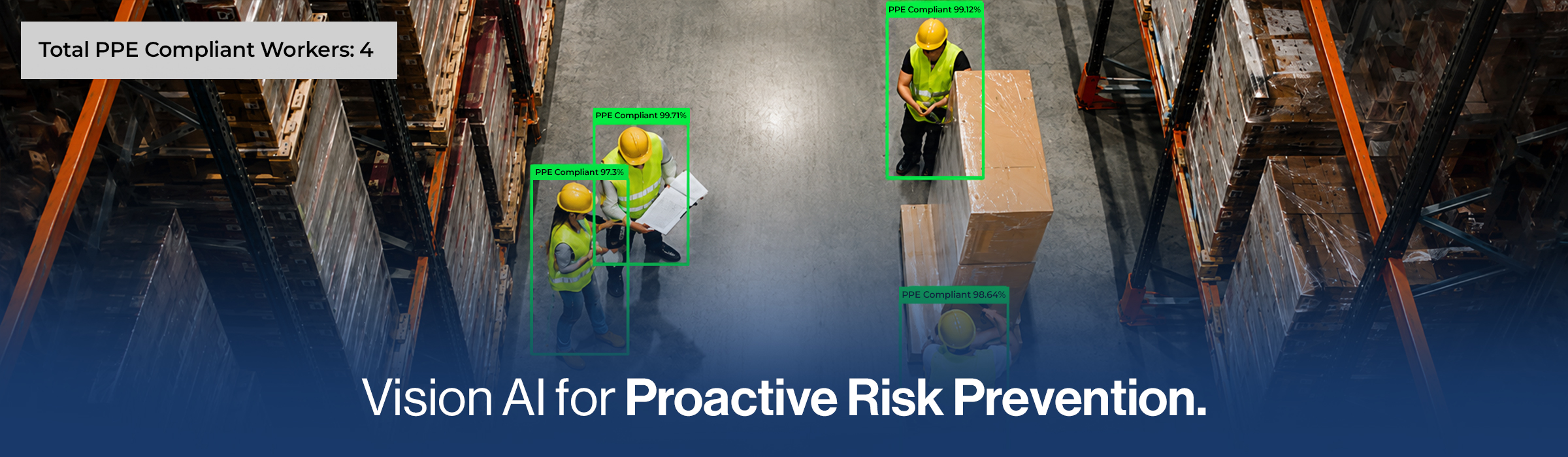
AI-powered CCTV changes the narrative by acting as a 24/7 digital auditor. By incorporating intelligent CCTV infrastructure, facilities can transform a passive video feed into a proactive hazard detection. The AI based camera system doesn’t just record the loading dock; it understands that a worker without a helmet is a safety violation that needs immediate attention.
Real-Time Monitoring and Proactive Risk Prevention
The most significant shift is the speed of response. Traditional systems require someone to manually review hours of footage to find a mistake. Vision AI does this in a fraction of that time, and the follow through is done by sending notifications to dashboards used by managers. By utilizing real-time CCTV analytics, managers can receive alerts that allow them to intervene before a hazard escalates. This is especially necessary in industries where safety compliance is paramount and operational functions must be kept running smoothly, e.g. petrochemical and oil refineries.
AI-Powered Industrial Safety Solutions by The Disrupt Labs
At The Disrupt Labs, we provide the Vision AI solution for industrial automation. Our intelligent vision system is designed to directly notify centralized dashboards, targets specific friction points like PPE compliance audits, and updates the company’s data as they go along, not having to wait for monthly or quarterly audits and reviews.
Our AI-powered solutions enhance Environmental Health and Safety (EHS) management by enabling real-time hazard detection, compliance monitoring, and proactive risk prevention across industrial environments.
PPE Compliance Monitoring Using Vision AI
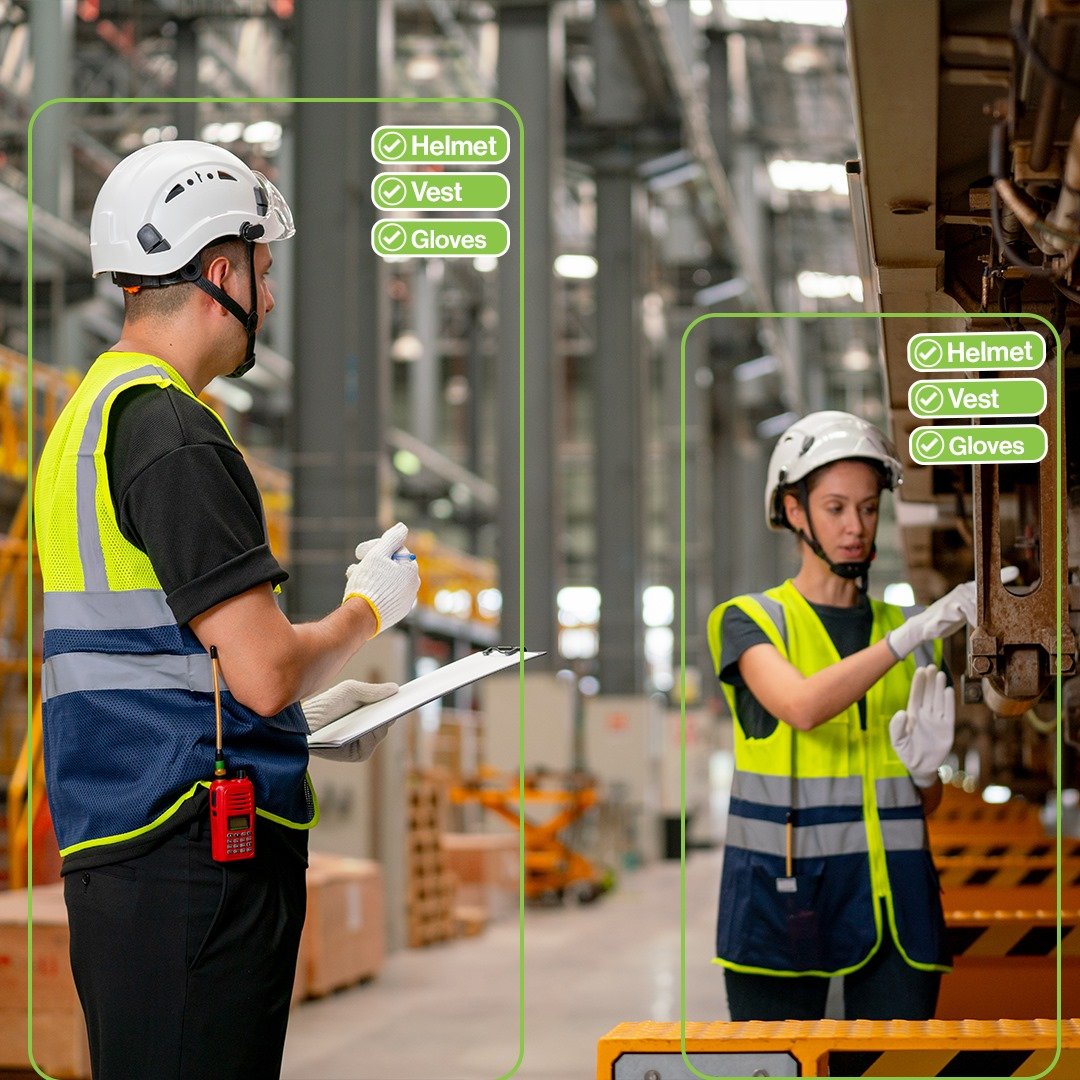
Maintaining compliance is a constant administrative struggle. Supervisors often find themselves policing employees rather than managing risk. Our PPE detection with AI video analytics automates this entirely. The system identifies missing helmets, vests, or gloves instantly, allowing for silent, consistent enforcement across every area.
Vehicle Entrance Management and Gate Pass Compliance
Gate management is often a bottleneck that compromises both security and speed. By digitizing the gate pass process and utilizing AI-powered truck management system for vehicle tracking, we ensure that every truck on-site is authorized and following designated speed limits. This eliminates the error prone method of keeping a manual log and provides a real-time record of site entry.
Hazard Detection and Unsafe Behavior Monitoring
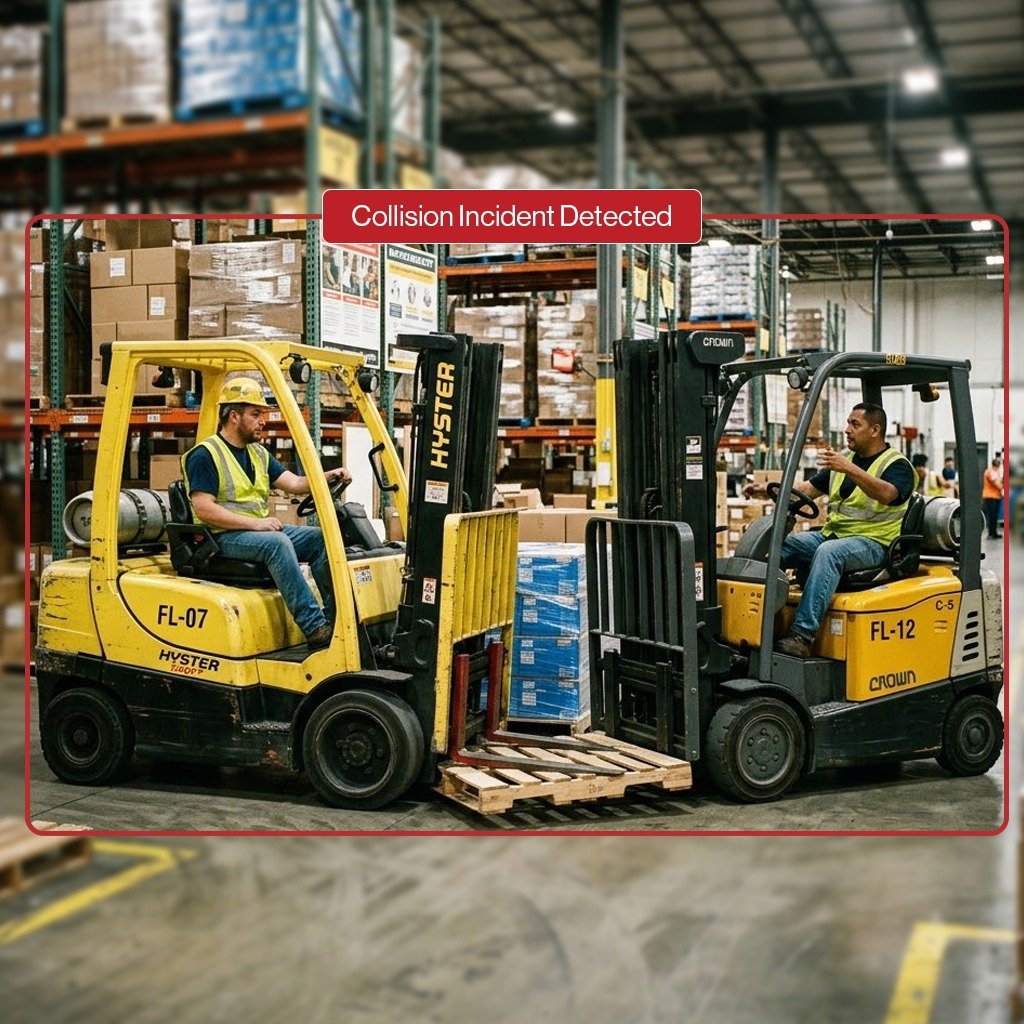
Common environmental hazards are often the most destructive. From unauthorized entry into high-voltage rooms to identifying potential slip, trip, and fall accidents, the AI monitors for patterns of unsafe behavior. This ensures that restricted zones remain secure and walkways remain clear.
How AI Enhances Safety Management Systems (SMS)
Modern safety management systems are force multipliers for any EHS department. It takes the guesswork out of compliance and replaces it with objective, timestamped evidence. Utilizing safety management software allows these insights to be shared instantly across the organization through centralized alerts and data. This also means scalability for companies looking to go big in the future with the same tried and tested solutions rather than revamping. An intelligent Safety Management System truly is a one-size-fits-all solution to any industry’s needs.
Automating Compliance Monitoring with AI
Automation removes human bias. Whether it’s a daily PPE check or a monthly gate audit, the smart CCTV provides a consistent digital record. This makes the transition to smarter risk management seamless, as every violation is logged automatically.
Real-Time Alerts and Incident Prevention
By notifying safety officers the moment a risk is detected through easy-to-use dashboards, the smart management empowers the team to be proactive in their approach. Vision AI ensures real-time validation of protocol adherence, which is what allows us to help safety managers move from a defensive posture to a proactive one. It is the biggest factor in changing the incident numbers at any workplace.
Vision AI strengthens Environmental Health and Safety (EHS) management by delivering real-time alerts, improving workplace safety compliance, and enabling teams to prevent incidents before they occur.
Data-Driven Safety Insights and Reporting
Beyond individual alerts, our Safetylens App allows managers to see trends. With all the alerts being available on the in-app and on dashboard, managers have an eagle’s eye view of everything happening. This not only improves data integrity, but also simplifies later analysis of any root causes. This insight allows for more targeted training and better resource allocation through robust safety management systems.
Workplace Safety Technology Innovations in 2026
As we look ahead, the integration of vision AI is only the beginning. The future of protection lies in a fully connected ecosystem where worker’s safety with AI works in synchronization to reduce the harm from human error.
Future Trends in Workplace Safety Technology
We are moving toward a world where the camera isn’t just an eye; it’s a smart manager. Integrated occupational safety technology systems will eventually connect with site access control, automatically restricting access to a danger zone if a worker isn’t wearing the correct gear.
Reduced Accidents and Workplace Injuries
The ultimate goal of environmental health and safety initiatives is the reduction of workplace accidents and incidents. By catching the near-misses that manual systems ignore, we help facilities build a true culture of safety.
Conclusion
Modern industrial environments are too complex to be managed by human sight alone. By integrating AI into your environmental health and safety framework, you aren’t just buying technology; you are investing in a future where protection is automated.
The Disrupt Labs is committed to helping you make that transition, ensuring that your workforce is protected by the most advanced visual intelligence available. Schedule your consultation with us today!
Frequently Asked Questions
Traditional environmental health and safety efforts rely on manual walkthroughs, whereas AI-powered systems provide 24/7 automated monitoring.
Yes. Since we offer tailored software, Vision AI is trained to recognize helmets, vests, or other PPE as per the needs of your company.
AI-based safety solutions provide continuous monitoring, automated compliance tracking, and data-driven insights that help organizations maintain safety standards and improve workplace safety practices.
AI-powered workplace safety monitoring uses computer vision and AI analytics to detect unsafe behaviors, hazards, and compliance issues in real time through existing CCTV infrastructure. It helps organizations improve Environmental Health and Safety (EHS) management and prevent incidents before they happen.

Wafa Zehra
She brings together her expertise in business development and content strategy to showcase the growing role of computer vision AI in enhancing workplace safety and HSE/EHS compliance. At The Disrupt Labs, she focuses on writing insightful content that explores AI-driven innovations and their impact on industrial safety.
View all posts