Industrial Automation in Pakistan 2026: Benefits, Challenges, and Vision AI Solutions
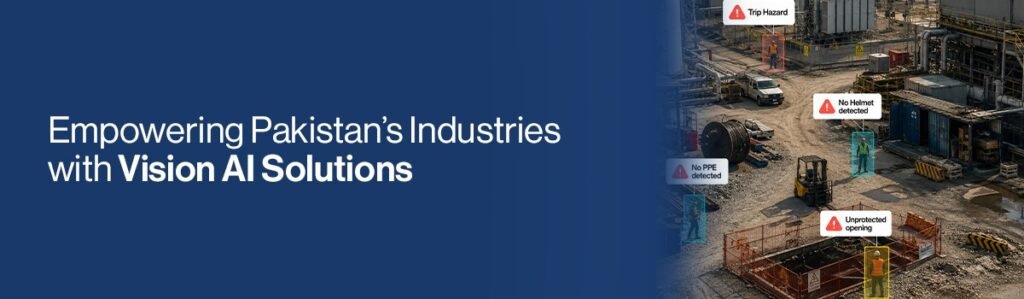
When it comes to industrial transformation, industrial automation in Pakistan has moved past the question of if and into the critical discussion of how. For industrial facilities across textiles, manufacturing, logistics, and pharma, the focus is now squarely on the pace and strategy of implementing advanced industrial automation solutions to remain competitive in a rapidly digitizing global market.
This blog covers what industrial automation in Pakistan looks like in 2026, where معامل الاضطراب Vision AI fits within it, and what the practical path forward looks like for facilities at different stages of readiness.
What Is Industrial Automation in Pakistan?
The term ‘industrial automation’ covers a wide range of technologies, and it is worth being precise about what it means in the Pakistani context in 2026. Industrial automation companies in Pakistan connect the overall facility plan, including machines, processes, and people, and enable real-time decision-making based on what is actually happening on the factory floor. Industrial automation in Pakistan represents a meaningful shift in how Pakistani industrial leadership is approaching these investments.
Understanding Industrial Automation and AI Systems
The useful distinction to draw here is between hard automation and soft automation. Hard automation refers to mechanised, fixed processes: robotic assembly arms, conveyor systems, automated cutting machinery. These have been part of Pakistan’s larger industrial facilities for decades and require significant capital investment.
Soft automation, by contrast, refers to AI-driven decision-making and real-time monitoring layered on top of existing operations. A camera feed that was previously recorded passively becomes an active monitoring tool when a Vision AI model is applied to it. A production line that was previously inspected manually at intervals becomes a continuously audited process when automated visual inspection systems are deployed.
The Growth of Automation in Pakistan's Industries
Pakistan’s textile sector, which accounts for a significant share of national export revenue, has been under sustained pressure to meet international quality and compliance standards. This is driving investment in automated quality monitoring and compliance documentation across mid-to-large textile manufacturers.
Other sectors are also moving to implement industrial automation training in Pakistan for improved operational consistency. Industries are using AI-powered monitoring, automated quality inspection, and real-time compliance tracking to improve productivity.
The interest in industrial safety standards compliance as a commercial differentiator, rather than just a regulatory obligation.
The Role of Vision AI in Pakistan's Industrial Automation
NCCI estimates that occupational injuries and illnesses cost the United States approximately $50,000 per worker’s compensation, with employers that implement effective safety programs seeing measurable reductions in those costs alongside gains in productivity and profitability.
The Disrupt Labs Vision AI is a software solution which integrates smoothly with existing CCTV and operational infrastructure. Vision AI helps fill the gaps between manual inspection, which lead to enhanced visibility across high-risk areas, production lines, and operational zones. These vision AI-based solutions strengthen EHS compliance, support consistent safety enforcement, and provide actionable, data-driven insights for more efficient workplaces.
What Is Vision AI and How Does It Work in Industrial Settings
Vision AI acts as the eyes of modern technology, allowing software to interpret complex factory floor data in real-time, which is why integrating it into industrial automation in Pakistan is the fastest way to upgrade legacy infrastructure.
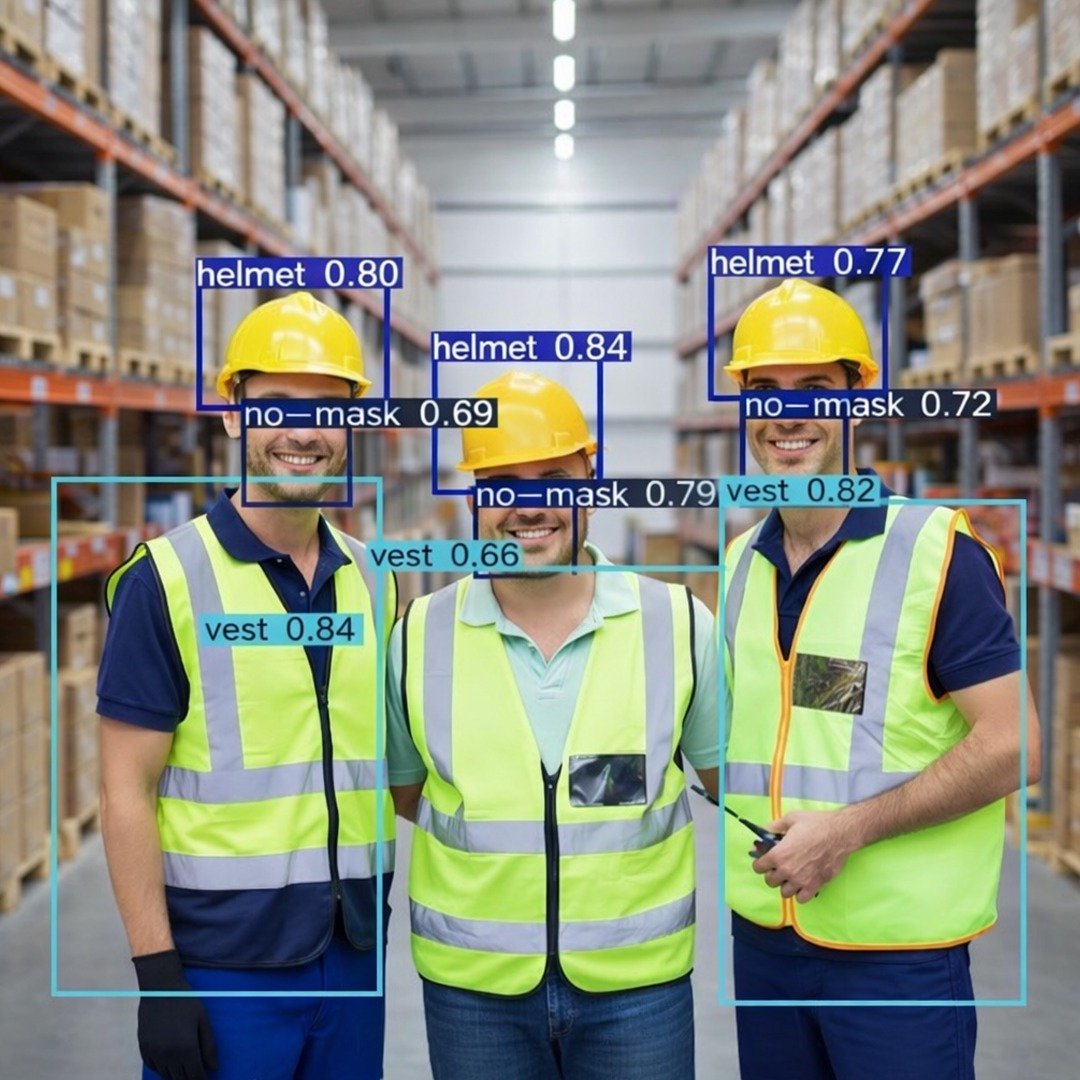
AI-based computer vision CCTV has many applications, especially for PPE detection. Vision AI PPE detection is a smart, automated solution. Using advanced computer vision, the solution analyzes live video feeds from existing CCTV to detect whether workers are wearing the required protective gear. By combining real-time PPE recognition, centralized dashboard insights, instant alerts, and automated reporting, AI-powered detection helps organizations maintain EHS compliance.
How the Disrupt Labs Is Leading Vision AI Adoption in Pakistan
One of the most significant challenges in deploying Vision AI in Pakistani industrial facilities is the approach of making the solution adaptable to the operational realities of local industries
The Disrupt Labs addresses this through tailoring Vision AI solutions to your facility. Paired with the facility of a central dashboard which provides real-time alerts to EHS supervisors, we help improve workplace safety metrics and reduce operational risk. This localised approach is also what makes AI-powered CCTV deployments practically viable for Pakistani facilities
From CCTV to Smart Safety : Upgrading Existing Infrastructure
The most practically significant feature of Vision AI for Pakistani industrial facilities is what it does not require. It does not require replacing existing camera infrastructure. It does not require restructuring production lines. It does not require significant hardware investment beyond what most facilities already have in place.
معامل الاضطراب provides value relevant to Pakistan’s large number of manufacturing facilities, instead of a full-scale automation investment, we provide a software solution that layers atop your pre-existing hardware, making it the smart choice. The shift from CCTV to smart surveillance represents the most accessible entry point into industrial automation for most facilities in this category.
Key Benefits of Industrial Automation for Pakistani Industries
The Disrupt Labs Vision AI solution is capable of configuration to the specific needs of a facility. Understanding what each feature actually does helps safety managers evaluate fit more accurately than a generic feature list would.
Increased Productivity and Operational Efficiency
For effective industrial automation Pakistan, real-time visibility into production floor conditions, SOP compliance, and bottlenecks allows management to identify and address inefficiencies as they develop rather than discovering them in post-shift reviews. For facilities running multiple shifts, the consistency of AI monitoring across all operational hours is a meaningful productivity advantage over systems that depend on supervisory presence.
Cost Reduction and Minimizing Downtime
For Pakistan’s manufacturing sectors, where operating margins are under sustained pressure, the financial case for automation is increasingly clear. The reactive versus proactive approaches show the clear difference of industries with no automations vs those with industrial automation in Pakistan.
The cost case for industrial automation becomes most concrete when calculated against the costs of incidents, shutdowns, and regulatory non-compliance. A serious workplace incident generates costs that extend well beyond the immediate event. Preventing incidents at the near-miss stage is materially cheaper than managing their consequences.
Improved Worker Safety and EHS Compliance
By deploying these advanced industrial automation solutions Pakistan’s industrial sector can finally replace reactive manual checks with an intelligent system that proactively identifies safety hazards and operational bottlenecks.
EHS compliance in Pakistani industry has historically relied on periodic manual inspection and incident-based reporting. Automated monitoring changes this from a periodic exercise to a continuous process, with timestamped records available for regulatory reporting and audit without additional manual preparation.
Real-Time Monitoring and AI-Powered Risk Prevention
Real-time CCTV analytics convert the video data that facilities are already generating into actionable safety intelligence delivered to the right person at the moment it is needed. Rather than logging a spill after a worker has already encountered it, the system flags the hazard before contact is possible.
معامل الاضطراب AI-driven monitoring improves hazard detection, and it’s real-time compliance tracking supports productivity, cost reduction, and safety outcomes.
Industrial Automation Solutions in Pakistan
AI-Powered Safety Monitoring for Warehouses and Manufacturing Plants
The main application of Vision AI in Pakistani industrial facilities is continuous monitoring of production floors and warehouse environments to verify that established SOPs are being followed across all shifts. This includes PPE compliance, restricted zone access and housekeeping standards.
Pedestrian and Vehicle Safety Using Computer Vision
Mixed pedestrian and vehicle environments are among the highest-risk configurations in industrial facilities, and they are common across warehouses, logistics hubs, and manufacturing plants where forklifts and workers share operational space. Computer vision workplace safety in these environments works through proximity detection.
PPE Compliance Monitoring and Hazard Detection
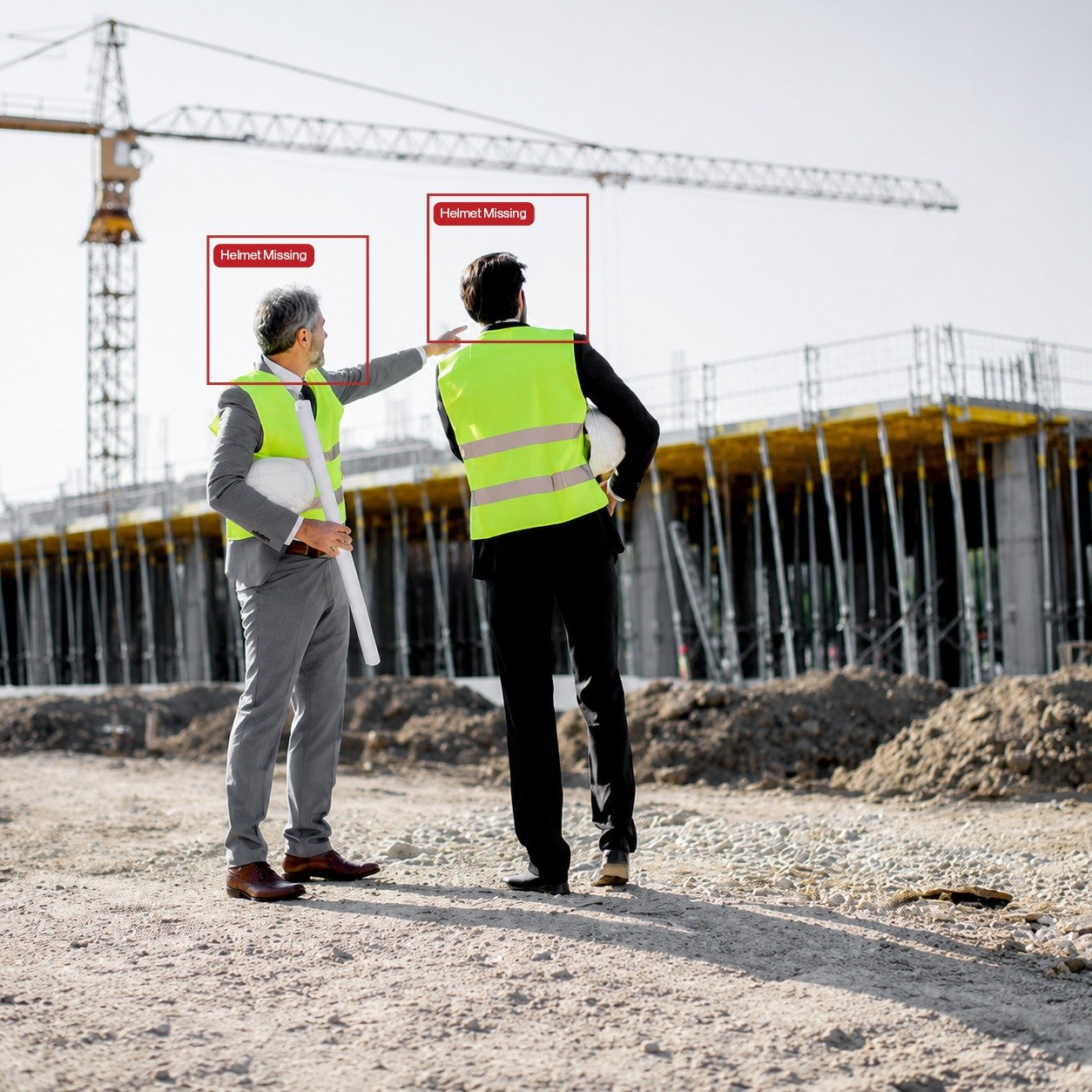
Vision AI-powered PPE detection applies the same compliance standard to every worker regardless of shift timing or supervisory presence. The system detects missing or incorrectly worn PPE, enabling reliable detection in real industrial environments.
Industry Applications of Automation in Pakistan
Automation in Pakistan's Textile Industry
Pakistan’s textile sector faces a specific challenge in export competitiveness: international buyers increasingly require documented quality control processes and safety compliance records as commercial conditions, not just regulatory ones.
Automated quality control through Vision AI visual inspection replaces subjective human judgment with objective, high-speed computer vision. معامل الاضطراب Vision AI-based quality control solution detects defects, including those that are missed by manual human inspections.
This significantly accelerates the inspection speed compared to traditional manual methods enabling the industry to scale while maintaining strict, consistent quality standards. This means reducing the rework and waste costs that manual inspection cannot eliminate at scale.
Warehouse and Logistics Safety Automation
Pakistan’s logistics sector is under significant pressure as e-commerce growth increases throughput demands on warehouse operations. Forklift safety is possible thanks to The Disrupt Labs Vision AI CCTV solutions in warehouse environments addressing both the safety and efficiency dimensions of this challenge.
Manufacturing Plant Safety and Quality Control
Automated visual inspection in manufacturing environments catches defects and process deviations at the point where they occur rather than at end-of-line quality checks, reducing rework costs and material waste. The consistency of AI inspection across long production runs is also materially superior to manual inspection, where attention and accuracy decline over time.
Conclusion
Pakistan’s industrial sector is entering a new phase where automation is becoming more accessible, practical, and essential for staying competitive. Vision AI enables manufacturers, warehouses, and logistics operations to improve safety, quality control, and operational efficiency by bringing real-time intelligence to existing industrial environments.
The Disrupt Labs is helping Pakistani industries adopt AI-powered solutions built around local operational challenges, enabling a shift from reactive processes to smarter, data-driven decision-making. With Vision AI, industries can take meaningful steps toward safer, more efficient, and future-ready operations.
Schedule a consultation with The Disrupt Labs today and see how we can help you transform your facility with AI-powered industrial solutions.
Frequently Asked Questions
Not at all! Vision AI runs as a software layer on your existing cameras, with no equipment replacement required.
No, it empowers them by handling detection and flagging, while humans retain full decision-making control.
Textiles, pharmaceuticals, oil, gas and petrochemicals, manufacturing, and logistics see the most immediate and measurable returns.
Vision AI-based Industrial automation solutions are a good choice due to the low cost of deployment compared to the long term payout. It saves on industrial downtime, compensation fees, and legal fees due to worker injuries, helps prevent accidents in real-time, and actively helps show you problem areas that need to be fixed.

وفاء زهرة
She brings together her expertise in business development and content strategy to showcase the growing role of computer vision AI in enhancing workplace safety and HSE/EHS compliance. At The Disrupt Labs, she focuses on writing insightful content that explores AI-driven innovations and their impact on industrial safety.
View all posts