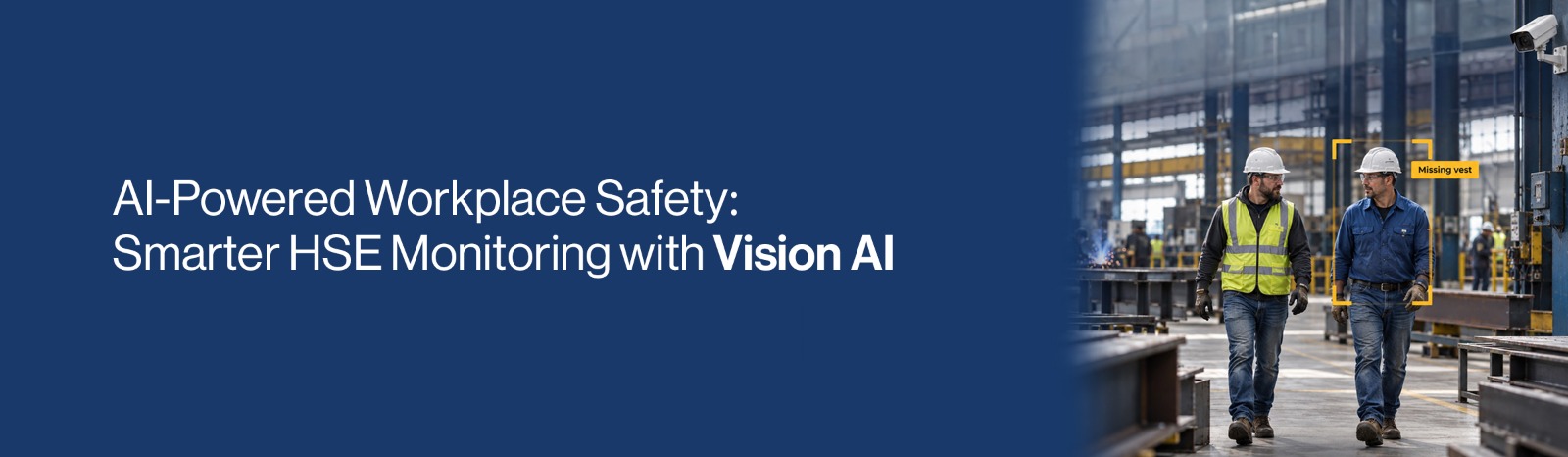
AI in Workplace Safety: A Complete Guide to Vision AI for HSE
Introduction
Industrial manufacturing plants, heavy processing facilities, chemical refineries, and expansive logistics distribution centers are fundamentally dynamic, high-pressure environments. Every single day, thousands of workers step onto active factory floors where complex workflows, heavy industrial machinery, and fast-moving logistics create an ongoing, shifting matrix of operational risk. Protecting these vital workforces is the primary mission, the highest calling, and the greatest responsibility of every Environmental, Health, and Safety (EHS) professional. Yet, chasing this ideal, uncompromised oversight across sprawling industrial footprints has historically relied on methods that belong to a bygone era.
Traditional workplace safety programs have long depended on periodic human observation, paper clipboards, and scheduled supervisor walkthroughs. While these legacy practices form the baseline of industrial compliance, they leave massive, dangerous operational blind spots. Human attention naturally fluctuates over long, grueling shifts, supervisors simply cannot be everywhere at once across a massive plant, and critical safety rules, most notably the proper wearing of personal protective equipment and strict adherence to hazard boundaries, frequently slip through the cracks when no one is actively watching.
Fortunately, the digital transformation of modern industrial environments is fundamentally changing how enterprises approach risk management. By shifting from reactive, paperwork-heavy audits to intelligent, 24/7 visibility, organizations can now safeguard their teams with unprecedented precision and consistency. At the forefront of this operational shift is AI workplace safety, a Vision AI based software solution designed to monitor for safety lapses so that safety regulations are met reliably across every shift, operational zone, and facility.
What Is AI-Powered Workplace Safety?
At its core, AI workplace safety refers to the strategic application of advanced machine intelligence and computer vision AI Solutions to automate hazard detection, protocol verification, and compliance monitoring. Rather than treating safety as a retrospective task evaluated only after an incident or near-miss occurs, intelligent systems act as an unblinking, continuous guardian over daily plant operations.
By analyzing live video streams sourced from existing industrial camera networks, AI workplace safety platforms identify potential hazards, protocol breaches, and unsafe behaviors the exact moment they happen. This proactive approach transforms passive video security archives into a dynamic engine for incident prevention. It helps safety teams bridge the persistent gap between written corporate policy and the ground reality of the facility floor. There are many applications of Vision AI in various zones, different sectors, and for a variety of purposes to enhance overall workplace safety protection.
The Shift from Reactive Records to Active Prevention
For decades, safety management has been tethered to lagging indicators, i.e. metrics that measure failures only after they have already resulted in injuries, equipment damage, or regulatory fines. Intelligent safety platforms flip this paradigm upside down by focusing entirely on leading indicators. By catching a missing safety harness, an unclipped hard hat, or an unauthorized entry into a restricted machinery zone within seconds, the system gives safety leaders the power to intervene before an accident occurs. This continuous loop of observation and instant correction fosters an environment where safety is an active, living part of corporate culture rather than an administrative checklist dusted off only when auditors arrive.
Why HSE Teams Are Adopting AI Safety Solutions
HSE leaders face mounting pressure from corporate boards, regulatory bodies, and insurance carriers to continuously reduce incident rates, meet stringent compliance standards, and cultivate a true zero-incident culture. However, traditional monitoring methods severely limit their ability to scale oversight across large industrial footprints. Manual walkthroughs capture only a fleeting snapshot of operating hours, leaving operations highly vulnerable during high-pressure night shifts, weekend skeleton crews, and fast-paced shift handovers.
Adopting AI workplace safety solutions empowers HSE teams to overcome these operational limitations and automate risk detection. Instead of spending hours compiling fragmented paper logs and chasing down lagging indicators, safety managers gain immediate access to centralized dashboards, instant alerts, and structured data trends. This technological evolution allows safety professionals to move away from administrative burdens and focus on what matters most: coaching workers, mitigating root causes, and building a resilient, proactive safety culture.
Overcoming Human Fatigue and Sprawling Footprints
No matter how dedicated a safety team may be, physical human limitations are an inescapable reality. A safety officer walking a three-million-square-foot facility can only look in one direction at any given moment. Furthermore, cognitive fatigue during the final hours of a strenuous night shift makes spotting subtle compliance lapses nearly impossible. Automated visual intelligence operates without fatigue, scanning dozens of camera feeds simultaneously. It ensures that every corner of the facility receives the exact same rigorous level of oversight, whether it is midday on a Tuesday or 3:00 AM on a Sunday.
How Computer Vision Improves Workplace Safety
Computer vision improves workplace safety by turning existing CCTV footage into actionable safety monitoring. The Disrupt Labs’ Vision AI analyzes live video streams from existing cameras to identify configured safety conditions across industrial environments. Instead of relying only on manual inspections or reviewing hours of recorded footage, HSE teams can receive alerts when a defined safety event is detected.
The system can be configured for use cases such as PPE compliance, no-go area intrusion, person-vehicle proximity, human-machine interaction, falls, housekeeping, fire and smoke indicators, and other site-specific safety requirements. For example, Vision AI can identify whether workers are wearing required PPE, detect a person entering a restricted zone, or flag defined proximity conditions between workers and moving equipment. When an event is detected, alerts can be sent to the relevant team for review and action.
Safety events can also be recorded and reviewed through the SafetyLens Mobile Application and Dashboard, giving HSE teams better visibility into recurring issues across work areas and shifts. This data can support inspections, corrective actions, safety training, and ongoing compliance efforts.
The effectiveness of computer vision depends on factors such as camera placement, image quality, lighting, field of view, and the specific use case being monitored. Vision AI is designed to support HSE professionals by providing continuous monitoring and timely alerts, while safety teams remain responsible for assessment, intervention, and corrective action.
How AI Safety Monitoring Works
In the context of safety supervision, Vision AI is like having an extra pair of eyes watching every corner of the factory or construction site all day and all night, making sure people are following the rules and spotting dangers before someone gets hurt. It catches the dangerous behavior the second it happens, allowing managers to intervene in real-time.
This is the real genius of it: it solves the blind spots when it comes to scaling. No matter how dedicated a safety team is, they cannot physically watch every corner of a massive manufacturing plant, a vast construction site, or a bustling logistics warehouse simultaneously. But intelligent AI-based cameras can. There are a lot of uses to this, a few of which we have highlighted to show the infinite potential for Vision AI’s scalability:
Real-Time PPE Detection
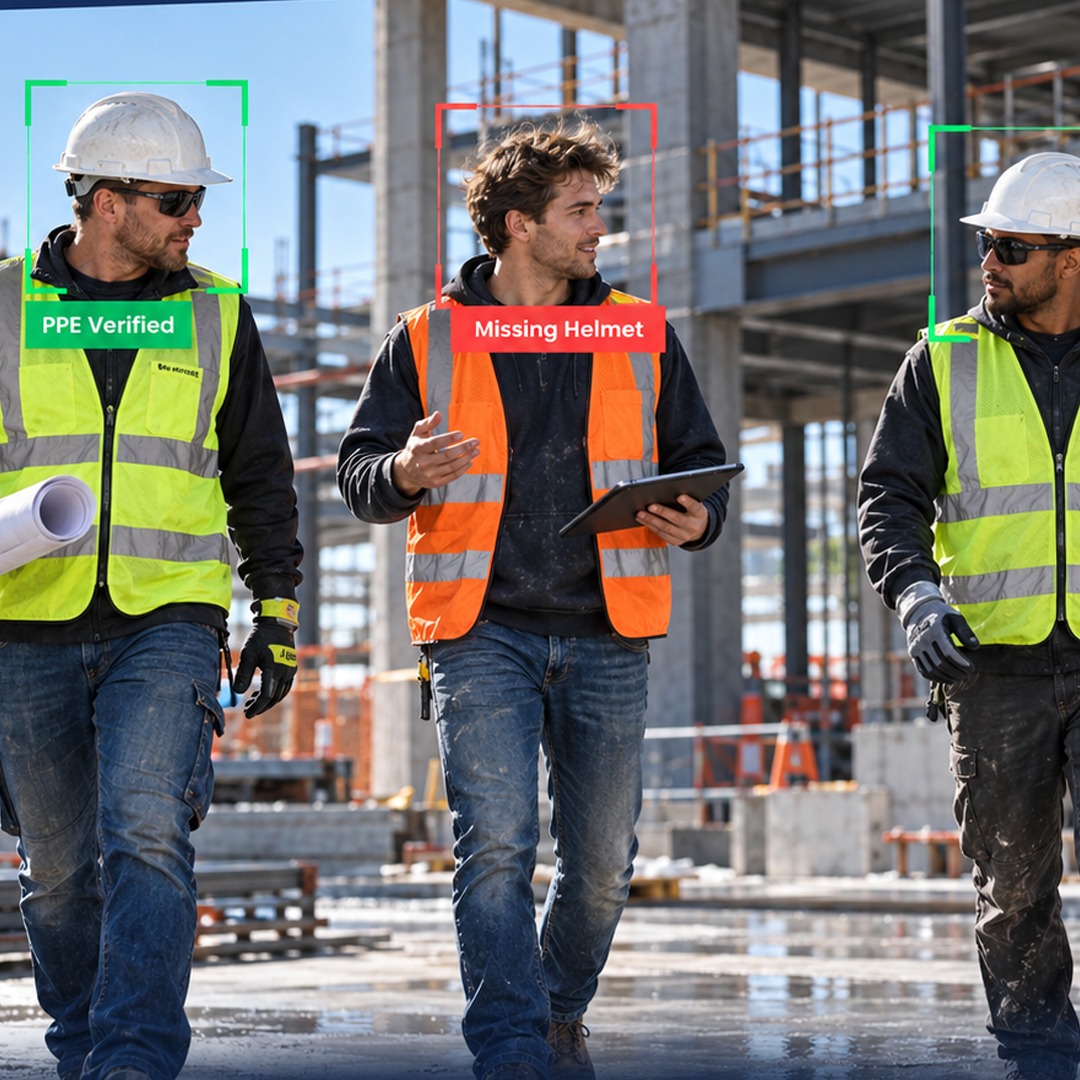
Ensuring workers wear hard hats, safety glasses, high-visibility vests, and specialized gloves is the absolute foundation of injury prevention. Advanced safety monitoring tracks adherence across every work zone, instantly flagging missing safety gear so supervisors can intervene before hazards lead to harm.
Restricted Zone Monitoring
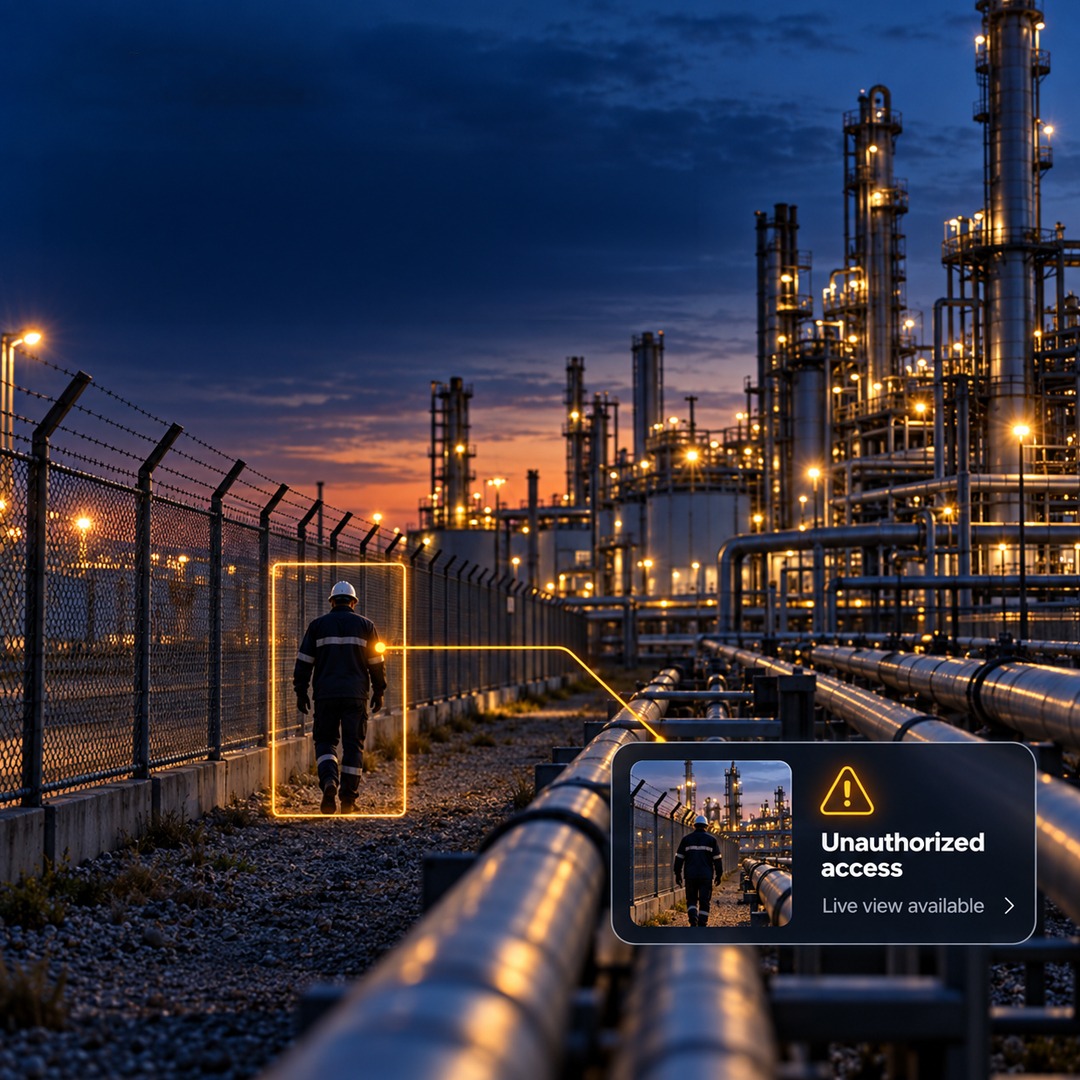
Controlling physical access to high-voltage rooms, chemical storage units, and dangerous machinery radiuses is critical. Computer vision establishes virtual perimeters that trigger immediate alerts when unauthorized personnel cross safety boundaries.
Fall and Working-at-Height Detection
Falls remain a leading cause of severe industrial injuries worldwide. Automated oversight monitors elevated platforms, scaffolding, and ladder work to ensure fall-protection harnesses are properly secured and safety protocols are strictly observed.
Fire and Smoke Detection
Standard smoke detectors rely on smoke physically drifting up to a ceiling sensor, which may not work optimally in a drafty warehouse or wide-open industrial space. However, layer this with AI, and early detection of smoke or fire hazards is made possible. This can potentially prevent a lot of damage. Automated safety video analytics scan live feeds for visual indicators and alert safety supervisors timely.
Safety Compliance Alerts
When a protocol breach occurs, the platform routes instant notifications via centralized dashboards or mobile applications directly to the responsible supervisor, compressing response times from hours to seconds.
Benefits of AI-Based HSE Compliance Monitoring
Implementing structured HSE compliant monitoring via automated video intelligence delivers immediate operational and cultural advantages. Traditional audits are frequently skewed because it is human nature to behave differently when you are aware of being observed.
Hence, workers temporarily alter behavior during scheduled inspections. Automated systems provide objective, unscripted oversight of normal operations.
Furthermore, integrating advanced AI workplace safety protocols to create compliance standards, generates clean, timestamped audit trails that streamline regulatory inspections and drastically reduce manual paperwork overhead.
Cultivating a Data-Driven Safety Culture
When safety discussions are backed by objective video analytics rather than subjective arguments, organizational dynamics shift dramatically. Safety committees can review anonymized compliance trends over months, identifying which departments or shifts struggle with specific protocols. This data-driven approach removes emotion from safety enforcement, transforming coaching sessions from punitive reprimands into collaborative problem-solving discussions that workers genuinely respect.
AI Workplace Safety Solutions for Construction Sites
Construction sites are notoriously dynamic environments where shifting work crews, heavy machinery, and changing elevations create constant exposure to danger. Deploying AI workplace safety solutions on active construction sites ensures that mandatory hard hats, high-visibility vests, and fall-protection equipment are worn consistently across every elevated work zone, drastically reducing job-site injuries.
Managing High-Turnover and Multi-Contractor Hazards
Construction projects frequently involve a revolving door of subcontractors, transient workers, and changing site layouts. Maintaining uniform safety standards across such a fluid workforce is one of the greatest challenges project managers face. Automated visual monitoring acts as an impartial enforcer that does not require knowing a worker’s badge history or contractor affiliation. It simply verifies that the required safety gear is present and that fall-protection tie-offs are engaged, ensuring that every individual on site adheres to the exact same baseline of protection.
AI Safety Monitoring in Manufacturing and Industrial Facilities
On busy manufacturing floors, workers interact closely with automated assembly lines and heavy material-handling equipment. Implementing comprehensive Vision AI monitoring right where human-machine interaction is highest ensures strict adherence to safety clearances, preventing accidental contact injuries and maintaining smooth operational flow.
How AI Can Support HSE Teams in Pakistan
For industrial enterprises operating across Pakistan, HSE teams frequently contend with the management of a vast labor pool, diverse regional sites, and rigorous local labor compliance mandates.
Elevating Standards Across Expansive Industrial Hubs
Industrial establishments stretching across regions face logistical hurdles when it comes to the matter of safety. As leadership tries to maintain uniform oversight from a central headquarters, automated monitoring systems are ideal to connect remote plants back to a unified digital dashboard.
This connectivity empowers corporate HSE directors to spot emerging risks across multiple provincial facilities simultaneously, ensuring that local safety teams receive timely support and that regional workers are protected no matter how remote their physical plant location may be.
Let us take the example of courier company warehouses: envision a busy facility with a lot of foot traffic, forklifts, vehicles entering and exiting, restricted access and housekeeping issues due to the sheer amount of packages moving through even a single facility, in a single shift. All of this being managed by a dedicated team of safety supervisors, that can pay attention to one portion of an area at any given time, and even then might miss issues due to fatigue. The result is lots of blind spots.
However, layered with Vision AI solutions, safety teams become equipped with a set of eyes that do not tire, and comb through multiple areas’ video feeds concurrently. In short, we return to the crux of it: infinite scalability, and tailored solutions that work for you.
AI Safety Solutions for UAE Construction and Industrial Sites
In the fast-paced industrial and construction sectors of the United Arab Emirates, maintaining extreme safety standards amid intense operational tempos is a top priority. Tailored AI workplace safety solutions help UAE enterprises meet stringent regional EHS regulations, safeguard multicultural workforces, and build world-class safety reputations.
Meeting World-Class Regulatory Benchmarks in Rapidly Evolving Markets
The UAE business landscape demands operational excellence, speed, and uncompromising regulatory compliance. Facilities operating in free zones and industrial hubs must adhere to rigorous national safety mandates while managing multicultural workforces where clear communication is vital.
Vision AI safety solutions transcend language barriers by focusing on universal visual compliance ensuring that hard hats, high-visibility gear, and safety boundaries are universally understood and strictly maintained across every team.
Lets use one of UAE’s biggest industries as an example: oil and petrochemical refineries and manufacturing. When you look at how AI safety monitoring applies to an oil refinery, petrochemical plant, or massive gas processing facility, it helps across several critical operational layers: PPE compliance, facility environment safety protocol adherence, restricted area monitoring, etc. to name just a few.
AI-driven logs provide timestamped data proving that safety rules were actively enforced or safety concerns were timely addressed and reviewed, making safety audits and compliance reporting seamless.
How to Choose an AI Workplace Safety Solution
Selecting the right platform requires evaluating several critical factors to ensure long-term success:
- Accuracy Under Real Conditions: Ensure the solution is trained on actual industrial footage rather than generic stock images.
- CCTV Compatibility: Look for software that integrates smoothly over existing camera infrastructure without requiring expensive hardware replacements.
- Customizable Rules: The platform must allow safety managers to configure distinct rules for different facility zones.
- Actionable Alerting: Real-time notification pipelines must deliver alerts instantly to the right supervisors.
- Enterprise Scalability: The system should support centralized reporting across multiple regional facilities.
Evaluating Total Cost of Ownership and Integration Simplicity
When investing in safety technology, decision-makers must look beyond initial software licensing fees to calculate the true total cost of ownership. Solutions that demand proprietary camera installations, custom cabling, or massive server overhauls create hidden capital expenditures and prolonged downtime. Choosing a software layer that overlays seamlessly onto existing IP camera networks guarantees rapid deployment, minimal operational disruption, and a significantly faster return on investment.
Future of AI and Computer Vision in HSE
According to an NSC survey of 500 employers and 1,000 employees in safety-sensitive industries, 38% of employers reported currently using risk management software in the workplace, while 44% said they are either testing or considering its use. This shows that the future of industrial safety is shifting decisively from reactive reporting to predictive risk management. As AI workplace safety platforms accumulate facility-specific data, advanced analytics engines will uncover structural trends identifying specific shifts prone to safety drift, recurring bottlenecks, or spatial congestion points. Enterprises that adopt these continuous data monitoring solutions today will establish an unassailable standard of operational excellence.
Moving Toward Fully Predictive Industrial Ecosystems
As smart AI software is further developed, safety systems will evolve from flagging violations in real time to anticipating hazards before they manifest. By correlating environmental data, shift schedules, fatigue patterns, and historical near-miss logs, future platforms will warn safety teams of high-risk operational windows before a worker ever steps onto the floor.
Conclusion
Maintaining rigorous workplace safety is an ongoing operational challenge for modern industrial enterprises. By deploying intelligent workplace safety solutions over existing camera infrastructure, facilities can curtail the blind spots of manual supervision, ensure absolute adherence to safety protocols, and turn passive video feeds into actionable intelligence. The Disrupt Labs delivers vision AI solutions that safeguard workforces, streamline audit readiness, and protect operations across high-stakes industrial environments.
Ready to elevate your plant safety standards? Reach out to explore a custom assessment tailored to your facility.
Frequently Asked Questions
AI-powered workplace safety uses advanced computer vision AI integrated with cameras to automatically detect safety hazards, PPE non-compliance, and dangerous behaviors in real time.
It provides continuous, 24/7 monitoring across all shifts, reducing supervisory fatigue and audit blind spots while delivering instant alerts when safety protocols are breached.
Yes. The Disrupt Labs solutions integrate seamlessly as a software layer over existing facility camera networks, avoiding costly hardware overhauls.
Benefits include faster incident response times, objective unscripted oversight, reduced paperwork overhead, and simplified preparation for regulatory audits.
No. AI acts as a powerful force multiplier that handles continuous surveillance and alerts, freeing HSE personnel to focus on leadership, training, and strategic risk management.

Wafa Zehra
She brings together her expertise in business development and content strategy to showcase the growing role of computer vision AI in enhancing workplace safety and HSE/EHS compliance. At The Disrupt Labs, she focuses on writing insightful content that explores AI-driven innovations and their impact on industrial safety.
View all posts