Near Miss Detection Using AI: How Computer Vision Prevents Workplace Accidents
Understanding Near Miss Incidents in Workplace Safety
What is a Near Miss Incident?
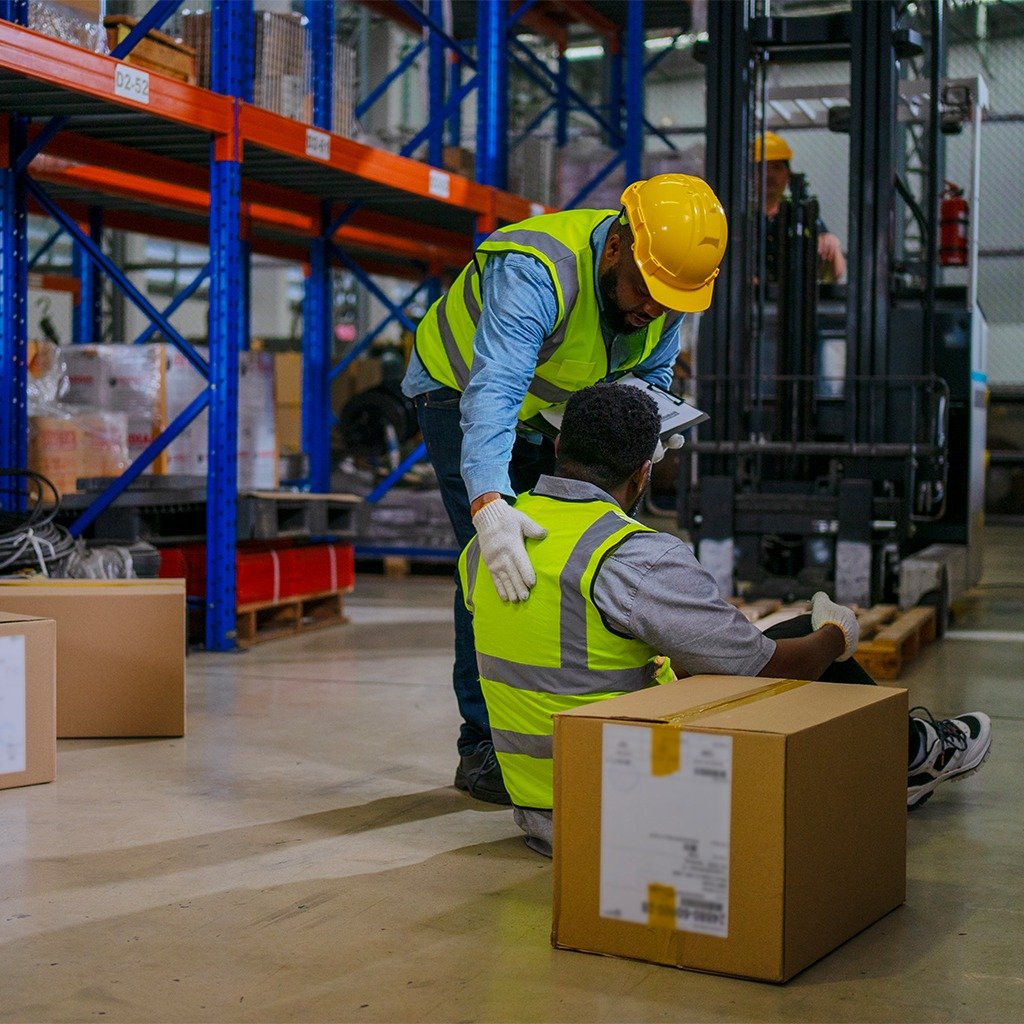
It is defined as any unplanned event that had the potential to cause injury, illness, or property damage but didn’t. Think of it as an accident that almost happened. A worker steps over a spill that nobody cleaned up. A forklift reverses a foot from a pedestrian who never saw it coming. A falling object misses someone by inches. No harm done, technically. But the conditions for harm were right there.
These events don’t make it into incident reports. They don’t trigger investigations. In most workplaces, they don’t get recorded at all. And that’s exactly the problem.
Why Near Miss Identification Matters
Near miss reporting is widely recognized as the most important leading indicator of serious workplace accidents. The logic is straightforward: for every major injury, there are dozens of near misses that came before it. If you can catch and act on those early warning signals, you prevent the serious event from ever occurring.
The importance of reporting near miss events goes beyond compliance. It shifts your entire safety culture from reactive to proactive. Instead of investigating what went wrong after someone gets hurt, you’re identifying what could go wrong before it does. That distinction is everything in high-risk environments. Near miss identification plays a key role in proactive safety management by helping organizations meet OSHA requirements. It also supports stronger EHS practices by identifying risks before they become workplace i
Common Examples of Near Miss Incidents in the Workplace
Equipment and Machinery-Related Risks
Heavy machinery creates some of the most dangerous blind spots in any facility. A lot of times near misses don’t get reported because workers were able to dodge in the nick of time. The moment passes. Nobody writes it down.
Overhead hazards are similar. Suspended loads that shift unexpectedly, unsecured tools falling from elevated platforms, conveyor systems that catch loose clothing. Each one a near miss incident with the potential to become a fatality.
Traditional supervision simply can’t monitor every machine interaction across an entire facility simultaneously.
Slips, Trips, and Workplace Hazards
Floor-level hazards account for a significant share of workplace injuries globally, and they’re among the most underreported close call incidents. Spills, tripping hazards, chronic hazards that human supervisors often stop noticing precisely because they’re always there.
The challenge with near miss event reporting at work is that they feel like minor issues in-the-moment. But each is a statistical countdown to an injury. This is what معامل الاضطراب Vision AI solutions are solving, through hazard detection in real-time. By enabling reliable detection in a real industrial environment, alerts can be sent to safety supervisors through a central dashboard and our SafetyLens Mobile app.
Challenges in Traditional Near Miss Reporting
Manual Reporting Limitations
Standard workplace safety reporting is built on human memory and consistency. Workers who witness a near miss have to stop what they’re doing, find the right form, remember the details accurately, and trust that reporting won’t lead to blame or administrative hassle. Most don’t bother.
Supervisor bias adds another layer. Safety observations get filtered through experience, assumptions, and workload pressure. A near miss that one supervisor flags as critical might get waved off by another. The result is near-miss incident data that’s inconsistent, incomplete, and skewed by whoever happened to be on shift.
Vision AI-driven safety monitoring does not have a bias, and does not report retrospectively. It improves safety metrics by sending real-time alerts to the relevant safety supervisor.
Lack of Real-Time Safety Visibility
Periodic walkthroughs give supervisors a snapshot of site conditions at a specific moment. Between those walkthroughs, a lot can happen. None of it gets seen in real time, and safety incident reporting only captures events after the fact.
The blind spots in periodic supervision aren’t a staffing problem. They’re a structural one. No human-based monitoring system can deliver continuous coverage across a varying industrial environment from all angles.
Vision AI, however, can cover multiple floors, zones, blindspots, restricted areas, and even different facilities simultaneously. This is thanks to the fact that as a safety and monitoring solution, it does not require hardware replacement. It layers onto pre-existing hardware e.g. CCTV feeds, and works by analyzing the footage in real-time.
Delayed Hazard Identification
Even when near misses do get reported, the time lag between the event and the response can be significant. A report submitted at end-of-shift doesn’t trigger a corrective action until the following morning. By then, the hazardous condition may have led to an actual injury.
This delay is one of the key reasons the importance of near miss reporting gets undermined in practice. The data exists, but it arrives too late to prevent the next incident. However with our SafetyLens app and centralized dashboard, events that occur are sent as alerts in real-time.
How Computer Vision AI Improves Near Miss Detection
AI-Powered Workplace Safety Monitoring
Computer vision AI doesn’t blink. It doesn’t take breaks, get distracted, or fall into the habit of seeing familiar hazards as normal. Deployed across existing CCTV infrastructure, AI-powered monitoring delivers continuous oversight of every camera feed, every second of the day.
The Disrupt Labs Vision AI is built specifically for this kind of near miss reporting at scale. Rather than replacing your safety team, it extends their reach across your entire facility in real time.
Real-Time Detection of Unsafe Conditions
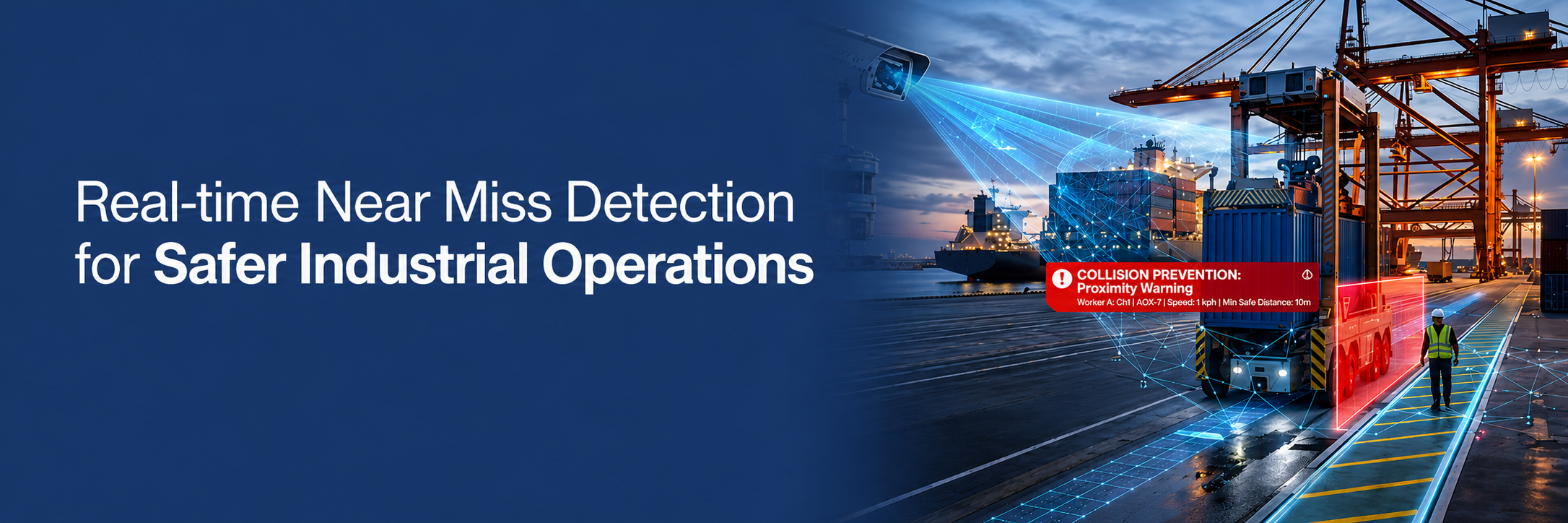
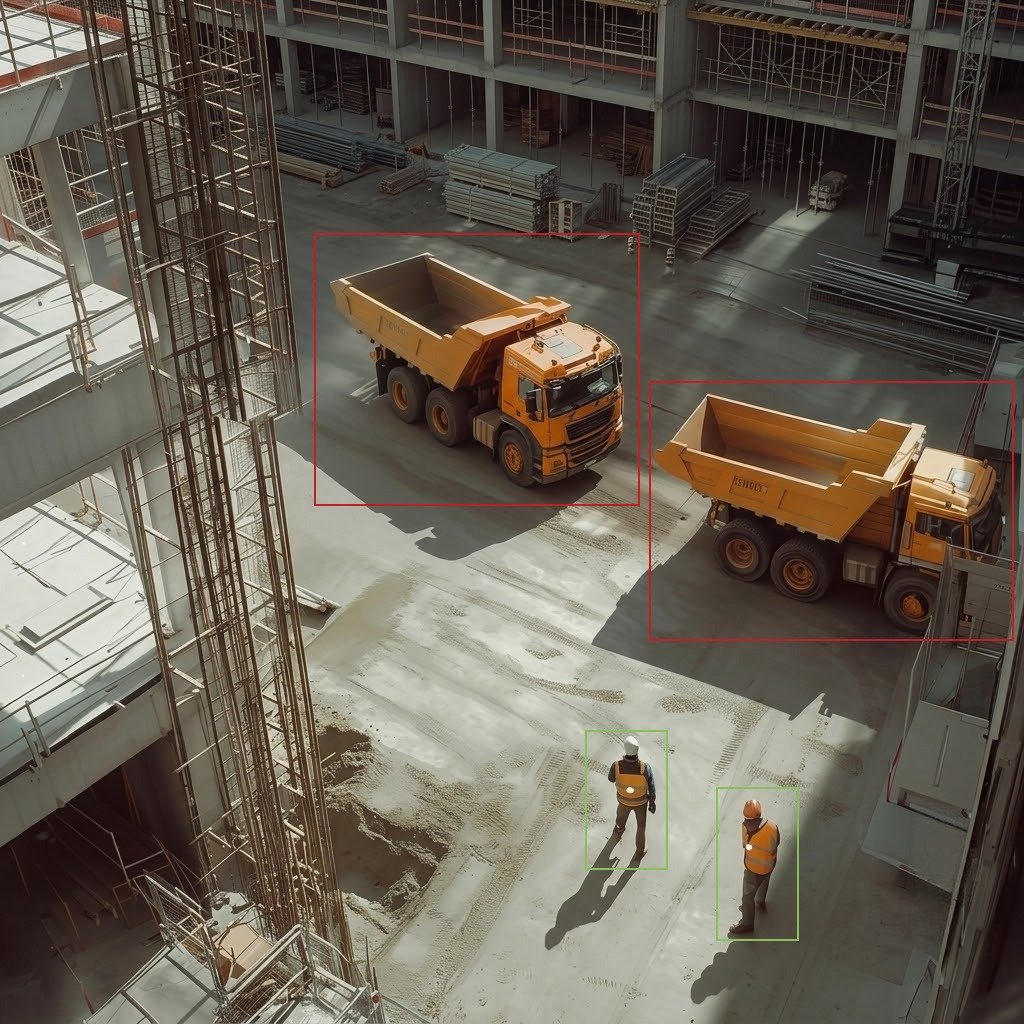
AI systems identify the physical markers of a near miss as they develop, not after. Speed anomalies near pedestrian zones. Proximity violations between forklifts and workers. Clutter appearing in designated walkways. These conditions get flagged instantly, enabling intervention before anyone gets hurt.
What makes this powerful for near miss reporting is consistency. The AI applies the same detection criteria at 2 PM and 2 AM. No fatigue. No familiarity bias. No judgment calls.
Automated Alerts and Safety Analytics
When AI detects an unsafe condition, it generates an immediate alert. That alert gets logged automatically, creating a timestamped, objective record of the event. No paper forms. No manual entry. Workplace near miss reporting becomes a digital, continuous process rather than a periodic, voluntary one.
Over time, those logged events build into safety analytics. Patterns emerge. High-risk zones, high-risk time windows, and high-risk equipment combinations all become visible in the data, giving safety managers the insight they need to address root causes rather than individual incidents.
AI Use Cases for Workplace Safety
PPE Compliance Monitoring
Vision AI detects missing or improperly worn personal protective equipment across all monitored zones. Helmets, high-visibility vests, safety footwear, and gloves are checked continuously against site requirements. Workers who enter a hazardous area without the correct PPE trigger an immediate alert, giving supervisors the chance to intervene before exposure becomes injury.
Forklift and Pedestrian Safety Monitoring
One of the highest-risk interactions in any warehouse or distribution center is the intersection of forklifts and workers. AI tracks both simultaneously, flagging proximity violations in real time. This is how near misses between vehicles and pedestrians get captured automatically.
Restricted Area Monitoring
Restricted Area Monitoring means access to hazardous zones, machine exclusion areas, and loading bays can be monitored continuously without requiring human presence at every checkpoint. Unauthorized entries or tailgating incidents trigger immediate alerts, reducing both safety risk and security exposure.
Walkway and Housekeeping Compliance Detection
AI identifies blockages in designated walkways, improper storage of materials, and housekeeping violations as they occur. These are among the most common precursors to slip, trip, and fall incidents. Automated detection keeps them visible and actionable.
Benefits of AI-Based Near Miss Detection
Preventing Workplace Accidents Before They Occur
The shift from reactive to proactive safety is the most significant benefit of AI-driven near miss problem reporting. When you can identify hazardous conditions as they develop, you can address them before an incident occurs.
Improving Safety Compliance and Visibility
Total site awareness means every zone, every shift, every interaction is monitored to the same standard. Near miss reporting becomes comprehensive rather than selective, and compliance is measured continuously rather than audited periodically.
Enabling Data-Driven Safety Decisions
Safety managers can see which zones generate the most near miss events, which shifts carry the highest risk, and which equipment combinations create recurring hazards. Those patterns drive targeted interventions rather than broad, resource-heavy programs.
How The Disrupt Labs Enables Proactive Safety Monitoring
Transforming Existing CCTV into Safety Intelligence
Most facilities already have the camera infrastructure in place. The Disrupt Labs layers Vision AI onto your existing CCTV network, converting passive footage into an active safety monitoring system. There’s no need to rip out existing hardware or overhaul your network architecture.
The platform delivers real-time alerts, automated incident logs, and continuous safety analytics through a centralized dashboard. Your safety team gets the visibility they need across the entire site, not just the areas they happen to be standing in at any given moment.
Conclusion: Moving from Incident Reporting to Accident Prevention
The future of safety incident reporting isn’t stricter managers. It’s better data, arriving in real time, before harm occurs. Manual safety systems are built on the assumption that workers will consistently identify, remember, and report hazardous events. That assumption hasn’t held up at scale, and it never will.
AI-powered CCTV captures what human observers miss, logs it automatically, and surfaces patterns that would otherwise stay buried in the gap between observation and paperwork.
Ready to transform your workplace safety? Contact the Disrupt Labs today to learn more about our AI-powered safety solutions.
Take the first step toward smarter, safer, and fully compliant operations.
Frequently Asked Questions
The Disrupt Labs Vision AI solution is trained to detect specific risk markers: unsafe proximity between workers and moving equipment, PPE absence, and zone violations. The alerts are sent in real-time to a central dashboard where a human safety supervisor oversees corrective measures.
It significantly reduces dependency on manual reporting by automating detection and logging. Human oversight remains important for context and corrective action, but the system eliminates the gaps that make manual-only near miss reporting unreliable.
The ROI comes from multiple directions: reduced incident costs, improved workplace safety metrics, reduced operational risk, and productivity gains from fewer work stoppages.
Through the central dashboard and the SafetyLens app, real-time alerts are sent to EHS managers and response teams with exact coordinates of where the incident has triggered the alert system.
Traditional safety programs rely on workers manually submitting reports, which often leads to underreporting or delayed response. Vision AI operates 24/7, putting safety first.

وفاء زهرة
She brings together her expertise in business development and content strategy to showcase the growing role of computer vision AI in enhancing workplace safety and HSE/EHS compliance. At The Disrupt Labs, she focuses on writing insightful content that explores AI-driven innovations and their impact on industrial safety.
View all posts